Words of Change - The Wee Glesga Poet
– 4 min read
There is a curious little phenomenon we often experience in this life called the Baader-Meinhof Phenomenon, also known as Frequency Illusion. It’s when you see or experience something new, then suddenly you start to notice it everywhere.
Maybe you buy a yellow car, and then you start seeing more on the roads. Or your friend happens to mention a new chocolate bar they tried, and boom! Adverts for it everywhere.
This is exactly what happened to me with The Wee Glesga Poet.
First, I saw her on TikTok, after that, someone I know shared one of her videos with me, then her work was recommended to us by a member of our Board. I read the signs and knew I had to meet her.
I went on to her website, sent off a message explaining who I was and asked if she would be interested in being interviewed. A short while later I received a reply from Emma Armstrong, the woman behind the colloquial handle.
Having lived in Clydebank most of her life, Emma grew up experiencing and witnessing the issues many here live with.
She explained: “I’ve had quite a turbulent life. I was homeless at 15, in and out of homeless accommodations, up until I ended up in a Women's Aid at 21 after a very violent relationship.
I had issues with drugs and alcohol earlier in my life, too. My life was very chaotic throughout that period.
This was when I started building my business. It was my driving force and focus, and that is what kept me on the straight and narrow.”
Emma worked inspiringly hard to build her business, B-Able, based in Clydebank, into the solid company it is today.
Her hard work was recognised in 2018 when she won Best Professional in Business at the Scottish Women's Awards.
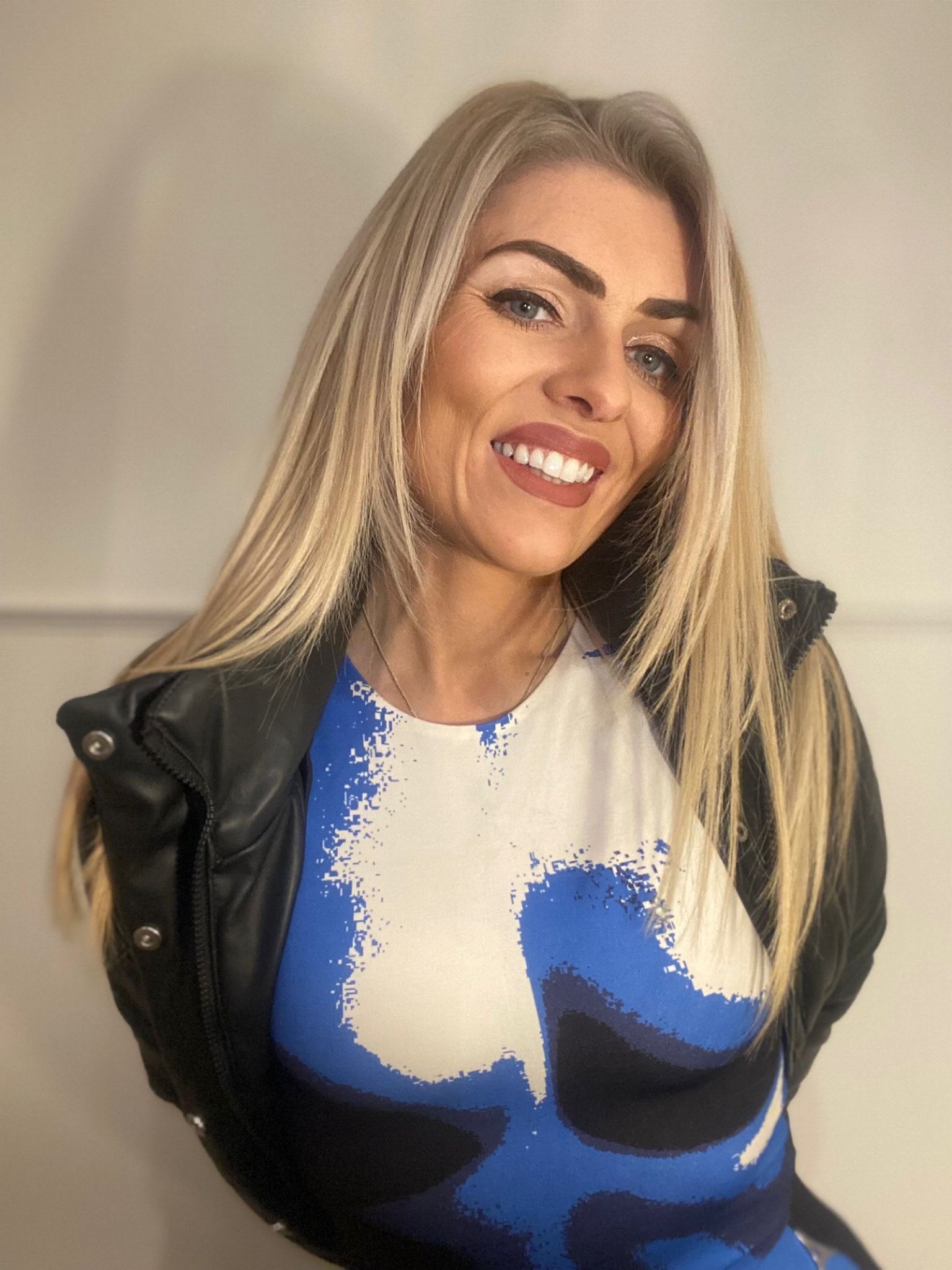
However, 2020 was another pivotal point in her life. The pandemic put restrictions on where her team could work from, it increased their workload, it brought personal issues regarding family health care, and it changed Emma’s way of thinking about everything.
“The whole scenario with Covid opened my eyes to a whole lot of things I had never been aware of before. As somebody who has always been very trusting of the establishment, systems, and healthcare, I started looking at things very differently and started not being as trusting. I began researching things,” Emma shared.
This is when she came across the work of Mattias Desmet, a Belgian psychologist and professor in clinical psychology, and the correlations he made between his work, the state of hypnosis and human behaviours.
Realising that she was identifying some of these human behaviours during the pandemic, Emma wanted to learn more about the mind and the impacts it endured due to people’s day-to-day lives.
“As someone who has been surrounded by addiction, anti-social behaviour and violence, all the things that come from living in a scheme in the west of Scotland, I wanted to know how this [hypnosis] was getting used, and I wanted to be able to use it to help individual people.”
Once again, Emma channelled her self-declared workaholic attitude and retrained as a clinical hypnotherapist. She opened a therapy centre in Helensburgh, providing mainly addiction-based therapy.
Now I know you are probably thinking at this point, where does poetry come into this?
On listening to Emma talk, poetry has been woven through our entire conversation, the poetry that is Emma’s life.
And it was from her experience, both professionally and personally, her first poem, ‘The Demon Drink’, was created.
“The struggles people were coming to me with were alcohol, cocaine and cannabis, because that seems to be the poison of choice in this neck of the woods. I wrote the first poem as an addition to add on to treatment plans to send to clients after their appointments.
It was a way to change perspective, to take them away from everything they have ever learned and the core beliefs their addictions are stacked upon, and the need to get them thinking differently.”
From that first poem, Emma wrote and shared more with her clients. They then began expressing how much they were helping and encouraged her to put them online to provide solace for those struggling further afield.
This was not an easy decision for Emma as she had previously experienced a side of social media that made her wary of expressing her thoughts and opinions.
However, she tentatively took that first step onto TikTok by sharing a couple of videos of her reading her poems.
The response was overwhelming.
“The Demon Drink went viral, within a couple of days it got over a million views.
"It was a crazy amount of attention that one post got.
"In the few months that preceded it, I felt something was unleashed when I started writing, and I just kept going.
"I started writing stuff that more people could relate to, like growing up in Scotland, Scottish patter, things that were a bit more comedic as opposed to serious and dark.”
From those initial posts, Emma has garnered an online following of over 100k people, written seven books, attended various locations for speaking events and offers commissions and consultancy work.
To find out more, visit Emma's website:
???? www.theweeglesgapoet.co.uk
???? www.tiktok.com/@theweeglesgapoet