Archaeology & Me
By Eva Miller
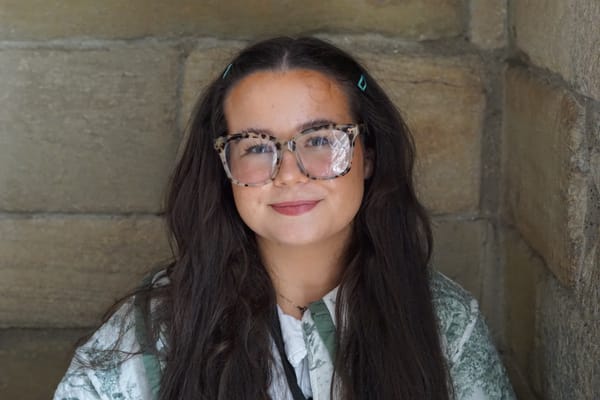
Growing up in West Dunbartonshire, I was aware of our industrial past.
My family had a huge impact on my passions without me realising it.
My uncle studied history at Glasgow University and my maternal grandmother is a vocational genealogist, so growing up I was always surrounded by historical records and would debate with my uncle on historical issues.
My great grandmother and I would have oral history talks every Sunday, discussing what life was like in West Dunbartonshire and the social issues people faced.
And my paternal granny kept a collection of postcards and personal letters from World War One.
She had a copy of the newspaper declaring the outbreak of war.
Every time I visited, I would make her show me the collection and we would go through it together.
In primary school she let me take her sacred book of postcards and letters to a school ʻshow and tellʼ.
I remember that feeling of excitement as I showed the class my grannyʼs collection and their surprise.
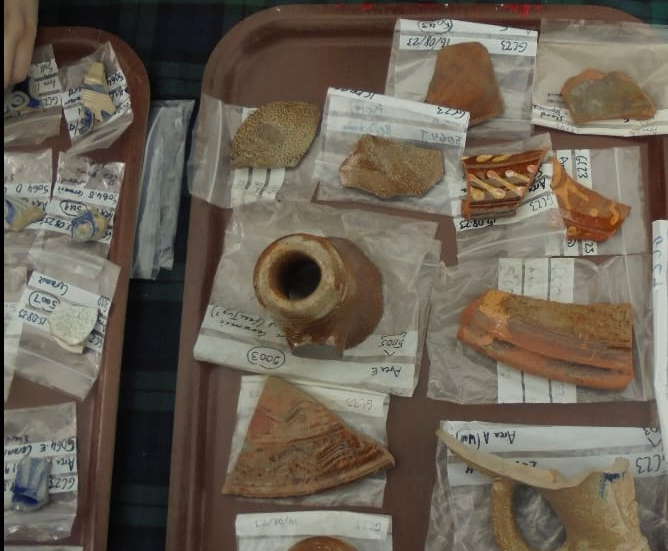
It seems quite fitting that my archaeology degree specialises in material culture - the study of historical objects and artefacts.
And I still get the same feeling of excitement as I did as a young girl when I get to discuss the hidden histories of people we now have access to thanks to objects.
So many individuals in history have been removed from written sources for various reasons, most of them intentional.
Objects are the one thing that can tell us about everyone in society - they are made to last.
And whether Iʼm interpreting a glass bottle from Dixonʼs glassworks to the museum staff at the Burrell Collection or talking about my grannyʼs collection, I am driven by the same belief: that objects have stories to tell and everyone deserves to have their history remembered.
Supporting & Encouraging
I first discovered archaeology doing historical research of the Plantagenets after a trip to London, where I first heard about the ʻboys in the towerʼ from a tour guide - one of historyʼs many unsolved mysteries.
I learned about the excavation of Richard IIIʼs remains 527 years after their initial burial and started asking questions about the field of archaeology.
After years studying history, it felt like there was a piece missing.
As much as I loved history, I wanted to be doing more - I wanted to work on projects in my local community, I wanted to leave a legacy, I wanted to have a support network of people - what I really wanted to do was be in the field.
A couple of years later I was applying to university, my heart set on Glasgow University as its Scottish history and Archaeology departments are legendary.
But what should have been an exciting and happy time was stressful and discouraging.
We had to inform our school of our university choices, and I was strongly discouraged from studying archaeology by my teachers (except from my history teacher).
Looking back, I strongly believe assumptions about archaeology are based on the media - people picture Indiana Jones and his theatrical treasure hunts and think thatʼs what we must do.
I would hope teachers could move beyond these media stereotypes and support young people navigating their academic prospects.
Thankfully, my mind was made up and there was no unconvincing me to study archaeology, but I worry other individuals are unsupported, especially in a small town.
It is the main reason I work with local organisations and our local MP to bring engagement opportunities for archaeology to West Dunbartonshire so young people can explore the field and be involved.
What is Value?
A question I get asked countless times is ʻwhatʼs the most exciting or expensive thing you foundʼ?
For me, the value of an archaeological find is in the meaning of the object to me and the experience of finding it.
Not the monetary value.
My most exciting find was a 16th century glass bottle that me and my best friend excavated together - the first thing we had ever found outside the classroom.
It was a crisp, cold, rainy day up in Glencoe.
We were both freezing and covered in mud.
She had called me over to look at something in our trench that she wasnʼt sure about.
She thought it looked black with the lack of sun in the trench and was brainstorming what it could be.
She was indecisive and decided it could just be a rock in her way. I went over to help her dig around it to get a clearer view.
After what felt like a small eternity waiting in anticipation, we pulled out the bottle and celebrated.
We felt like we had found the crown jewels. In that find we had poured three years of theory into a single moment.
Even though it was one of many glass bottles found in those trenches, that moment made us feel like archaeologists and gave us an insight into what our futures could look like.
This was priceless.
Uncovering Forgotten Stories
I also worked closely with Archaeology Scotland on their Adopt-a-Monument programme, helping record and research the historic graveyard in Old Kilpatrick Kirk.
My placement involved researching and documenting one of the oldest functioning burial grounds in the local area whilst supporting community-led efforts to protect and preserve the site for future generations.
For me, archaeology is about more than excavation and discovery.
It is about uncovering the forgotten stories, reconnecting people with their heritage and ensuring local history remains accessible to the communities it belongs to.
Through both research and public engagement, I hope to continue exploring how archaeology can strengthen identity and bring overlooked histories into public view.
Working on one of the oldest surviving burial grounds in my local area gave me a new perspective on the landscape I grew up in.
It reinforced that archaeology isnʼt just about distant pasts and for me, it certainly hasnʼt been all about famous discoveries - but it is about understanding the stories embedded within my own community.