
Autistic Radio Insights
By Jenny Watson

Walking into Alexandria Library on an unusually dry, mild day, I wasn’t surprised to see the space bustling with life, and I was even less amazed to see Harry McCormack waiting for me.
For as long as I’ve known Harry, he has always been early, organised and ready to get to work. Exactly the type of skills you would look for in a radio show host.
Which was the reason for our meeting that day.
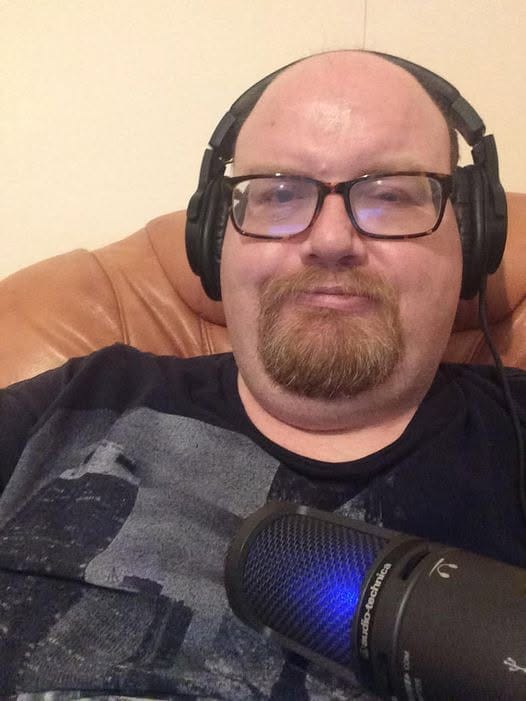
Harry hosts a weekly radio show on Autistic Radio and has done for several years now.
“Autistic Radio is autistic-led,” Harry tells me.
“It's led by an autistic charity, led by autistic people called Autistic Association. I came into contact with them during COVID, when there was a lot of online meetings.
“At one meeting I was asked if I was interested in doing it, and I thought, well, it's something I haven't tried before. And the things I've done before are generally autistic organisation that's so official and formal, and limited, but autistic radio gives you an opportunity to be freer and talk about your experiences.”
The radio funded by Autistic Association was formed in 2021 by Julian Barton. Identified as autistic in his 50s, Julian thought he would try the radio out himself to see if there was space and interest for an autism-centric radio show.
Through meetings and planning, everyone who became involved noted one thing…autism can be lonely and isolating. A radio show would definitely provide a space for people to tune in to hear about shared experiences and feel less alone.
“A lot of people live alone, and Sunday nights seemed to be the worst time for a lot of people because even if you had a busy week coming up, it was just this sort of kind of downtime in terms of feeling. And it was like somewhere to go on a Sunday evening.” Harry shares.
From that realisation, Julian committed to broadcasting live on a Sunday evening, making the show accessible all over the world.
It would be streamed through a platform called StreamYard and also available on Facebook and YouTube. Depending on the conversations had during the show, the live stream was then turned into a podcast to be available to listen to at any time.
Harry tells me about what has evolved from the original show: “I created a Facebook page for Autistic Radio. To promote the project, and network with other autistic people and organisations from all over the English-speaking world, basically. And just to share it and be safe space for people to look at on Facebook, because as we know Facebook can be quite a dangerous place and it doesn't always feel safe.”
On Harry's 5:55 show, he discusses the various things he and others have shared in the Facebook group throughout the week. The topics can range from general issues that happen to people with autism, to the services they access, to controversial experiences someone may have experienced.
“It's not always serious. Sometimes it's about people sharing their hobbies, things like writing, art, stuff like that.
“And promoting the positive side of autism as well. Even though it has to be talked about, the more what some would say negative or sensitive side - like people needing support - it's good to say, ‘look, it's not all doom and gloom’, it's like things can be done if things are set up properly for people.”
With no formal training or experience in running a radio show, the association got some funding to purchase equipment.
Through practice, everyone learning they tried together to figure out what set-up and programmes worked best for them.
They chose audio only as, for some, they felt shows and podcasts with visuals can be distracting. Plus, some people did not like to show their faces, which put a barrier in place for being involved.
This really shows the care and consideration put into making the show a safe and comfortable environment for all.
And Harry’s reason for getting involved is the purest form of wanting to help others.
“I've always wanted to do something to help give a voice to autism and artistic people, and I just couldn't find a way in.
“I got involved in different groups and meetings, but it seemed to be very limited, and I just wanted to widen the scope and show that autism and people who are autistic are all different.
“Because there's an assumption, there's always a stereotype to absolutely everything - and autism, being autistic, is no different.
“So, it's just to help, break down stereotypes and use my experience as a positive influence in conversations and basically inspire others.”
To finish our conversation, I asked Harry if he could only express one more thing, what would it be.
This is what he said: “In this society, employment is encouraged, but for some with autism, it is not always an option. I just want to say you don’t need to be employed to have worth.”
Find out more about Autistic Association here: https://www.autistic-association.org/ and Autistic Radio Facebook here: (20+) Facebook