
Daughter of the Rock
By Rob Williams

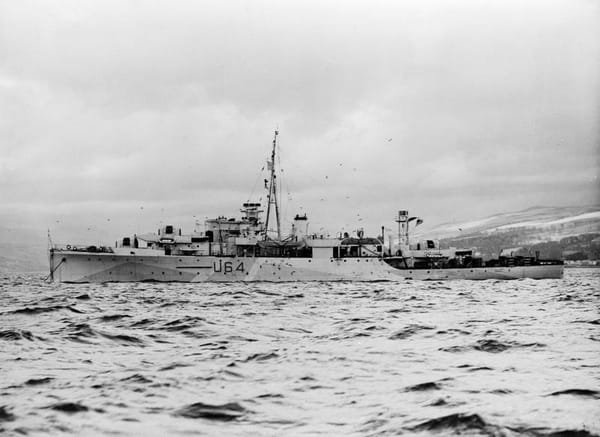
This is the story of a ship born in the shadow of Dumbarton Rock in the yards of William Denny and Brothers - a ship with an illustrious history and fascinating provenience.
In August 1941, Convoy OG71 was making its way from the UK to Gibraltar.
Among the ships SS Aquila, carrying 21 members of the Womenʼs Royal Naval Service (Wrens) and a naval nurse en route for deployment.
In the early hours of August 19, the convoy was attacked by a ʻwolfpackʼ of German U-boats - the first time the Kriegsmarine had used this tactic.
At 03.10 Aquila was struck and the ladies perished, the biggest single loss of Wrens in the war.
The tragedy caused an outcry and forced the government to end transporting military personnel on civilian ships.
In response, all members of the Wrens donated a single dayʼs pay towards a new ship dedicated to convoy protection and taking the fight to the enemy.
The ship - a Black Swan class sloop - ordered from William Dennyʼs shipyard in April 1940 was laid down in February 1941 and launched August 11 1942.
It was the Second Sea Lord, Admiral Sir William Whitworth, who suggested the name HMS Wren as “an encouragement to the Wrens who were already doing excellent service.”
She was launched by Mrs Vera Laughton-Mathews, Senior Officer of the Wrens, and previously editor of the Suffragette Magazine.
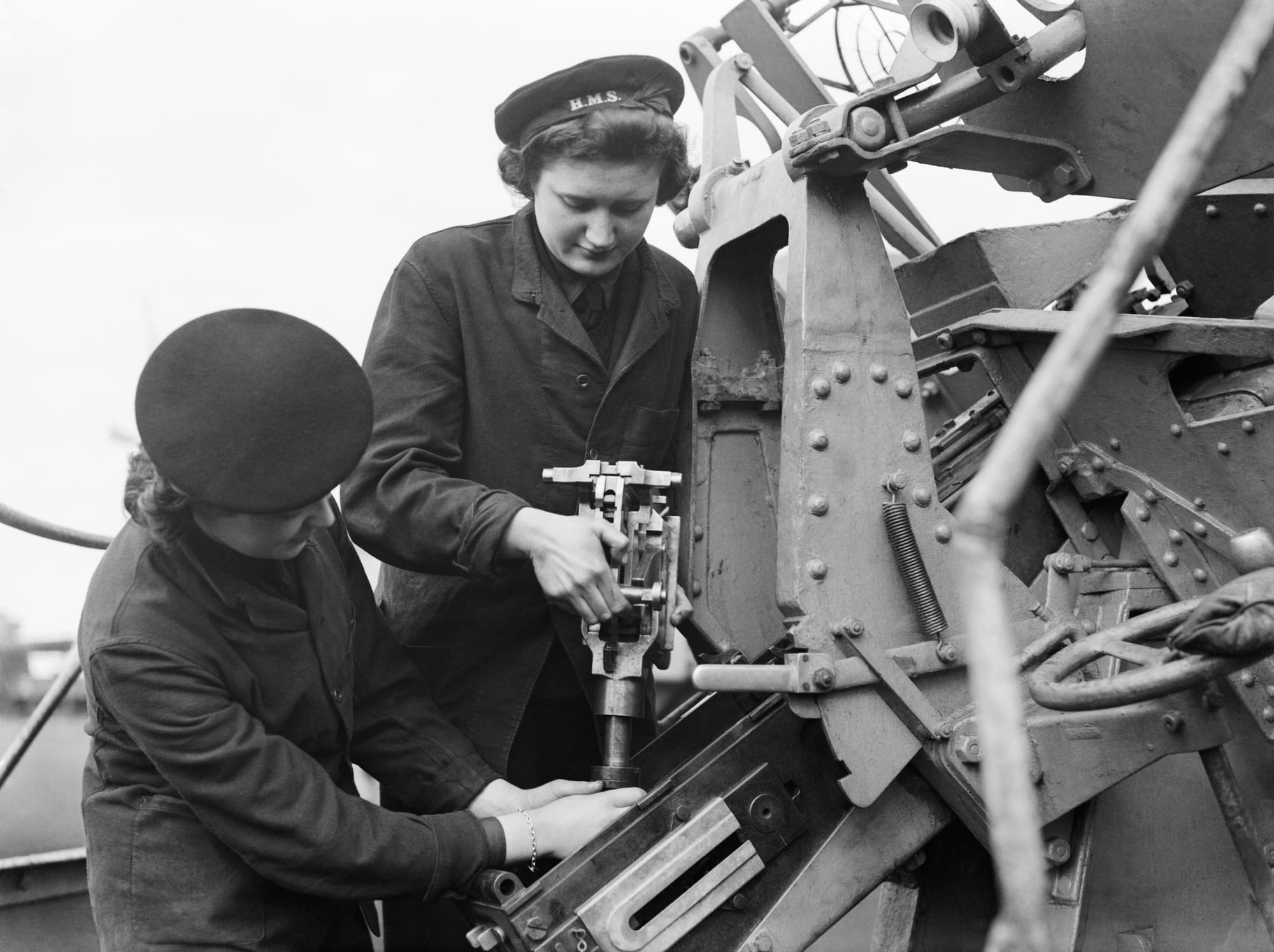
Over 300 Wrens from Greenock, Glasgow and Helensburgh paraded at the occasion, followed by a celebratory luncheon.
In time honoured custom a bottle was broken over the bows of the new ship and as Mr Denny observed “it occurred to me that a locally built ship should be christened, not with an alien product, but with a locally distilled liquor,” adding “their Lordships at the Admiralty were all familiar with the wine of Scotland!”
On behalf of the Admiralty, Vice Admiral Troupe ended proceedings saying “the reputation of the Wrens could not stand higher in Scotland as they released a man for active service.”
In February 1943, having completed trials, storing and work-up, HMS Wren was commissioned into the Second Escort Group based at Gladstone Dock in Liverpool and commanded by renowned Captain F.J. ʻJohnnieʼ Walker.
The group was highly trained and roamed the North Atlantic and Bay of Biscay employing Walkerʼs innovative tactics in combating the wolfpack menace.
HMS Wren is credited with assisting in the destruction of five German U-boats, defending the Arctic Convoys and supporting the Allied landings on Normandy on June 6, 1944.
She survived the war and went on to serve in the Persian Gulf, Indian Ocean and Mediterranean before being scrapped in Rosyth in 1956.
Throughout this time, she retained the affectionate, close affinity with the Wrens.
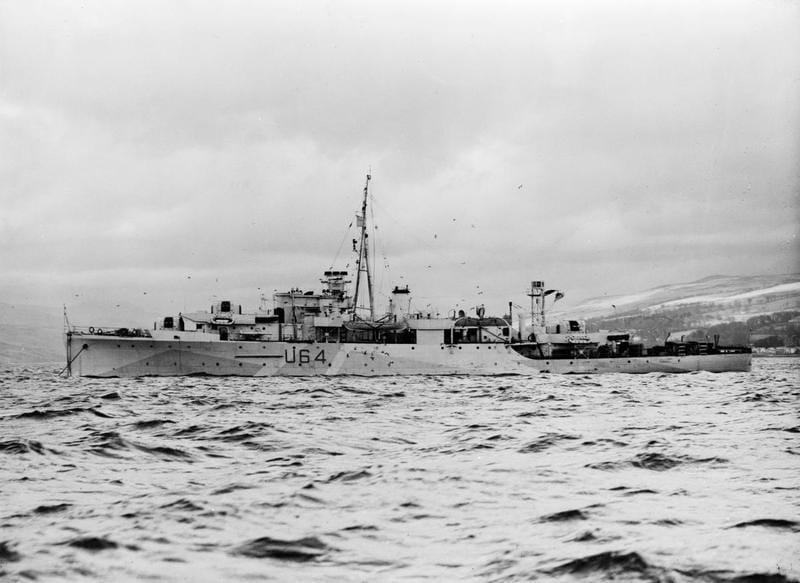
Whenever she entered a port where Wrens were present, she would signal: “Your ship is in port. Come and visit!”
Mrs Laughton-Mathews was a frequent guest onboard and recalled Commanding Officer, Lt Cdr S J Woods RNR, telling her that, on return to Liverpool following one of their famous “kills”, the highlight was when “a squad of Wrens marched along the quayside, eyes righting proudly, as they honoured THEIR ship.”
In remembrance of the ladies whose sacrifice had prompted the bond between the ship and the Wrens, a brass plaque was proudly displayed in the sickbay - a reminder of HMS Wrenʼs provenance.
And in a corner of the National Arboretum stands a granite plinth.
Dedicated and unveiled in 2009, it is known as the Aquila Memorial and contains a time capsule recording the names of the Wrens and naval nurse lost in the sinking of the SS Aquila.
Atop the plinth is a cedarwood sculpture of a wren, dedicated to all who served in the Womenʼs Royal Naval Service.
HMS Wren was a Dumbarton ship, as William Denny said, “built by Scotsmen.”
Like many of her compatriots she had to leave to make her impact on the world.
But she had an illustrious wartime career, gained a unique place in the hearts of the Wrens and continued her distinguished service after the war had ended.
She was, very much, a redoubtable Daughter of the Rock.