Deep Dive into Swimming With Autism
Words by Annie Jordan & Photos by Harvey Smart

– 5 min read
Words by Annie Jordan & Photos by Harvey Smart
Sometimes there is a story which is greater than the story itself: one which grows arms and legs and eventually takes on a life of its own.
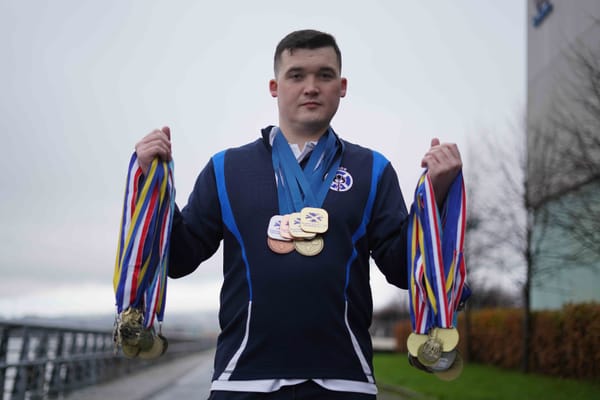
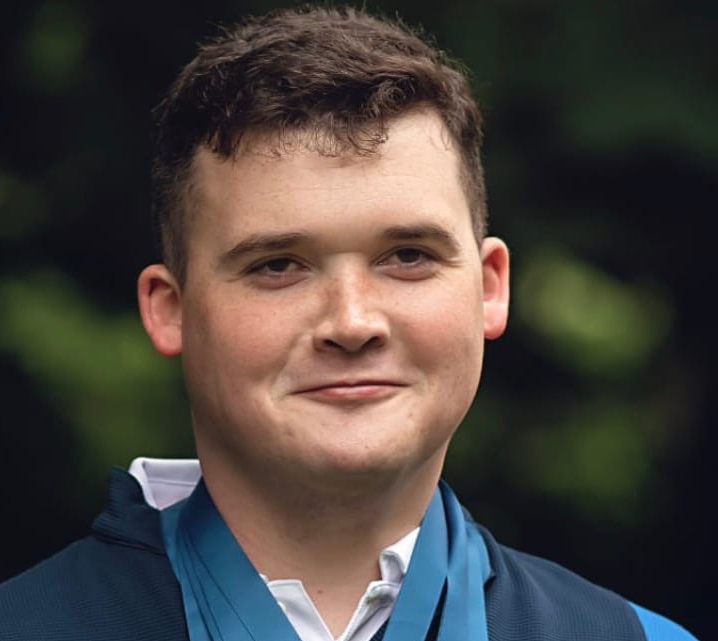
Clydesider sent me on one such assignment to meet Aaron Wright, a young autistic swimmer aged 25, and his mother Monique.
Monique would love to shine a spotlight on a story that perhaps hasnʼt been told: the story of countless other children with disabilities who have come before and will come after, some who are possibly in the same situation and need a voice.
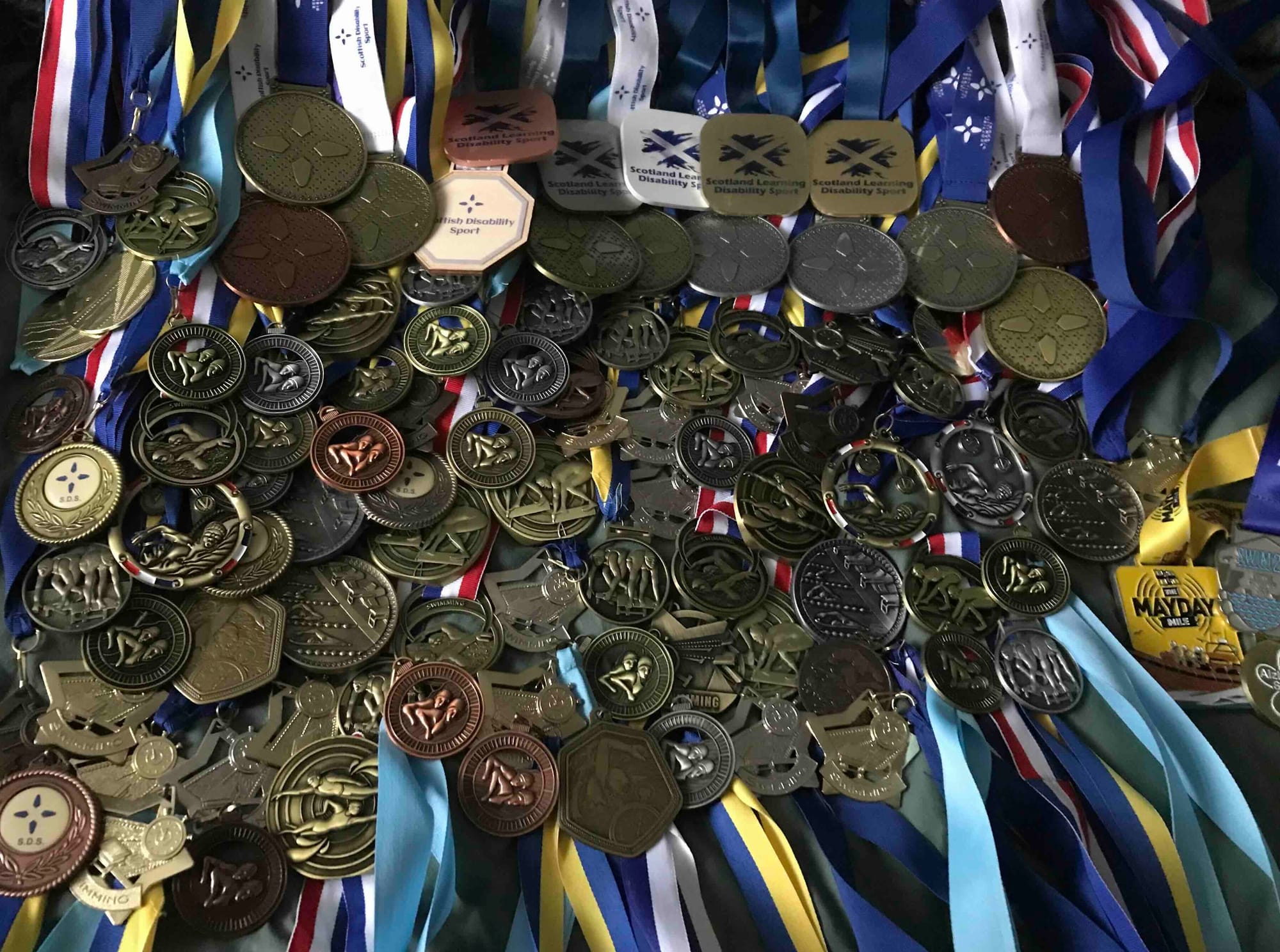
I planned to interview Monique and Aaron about his many swimming medals, 96 or so! The many competitions and triumphs swimming at regional and national level in venues up and down the country.
My prepared questions focused on his golds and silvers and how he felt about winning and swimming: “I think about it all the time,” he says.
Initially, I was fixated on getting all the fine details correct: times and dates, competitions and venues, swimming strokes and racing times.
Suddenly, I realised my story didnʼt lie in facts and figures, nor chronological order.
Putting all these to the one side, which is difficult because Aaron has achieved awards that others could not even dream of (see footnote), I found my real story: a perfect tale of love between a mother and her son - a devoted mother who recognised her sonʼs passion for swimming at an early age.
“When Aaron was very little, he couldnʼt go past water whether it was a puddle or the Clyde but heʼd try and get in…” laughs Monique. “It became a handful!”
A mother who has made it her lifelong mission to help her child unlock his exceptional talent and fulfil his potential, despite all the factors which conspired against it, not just his “barriers to learning” but the availability of facilities and coaching provision; a mother who has selflessly swept aside her own grief after the loss of her husband 10 years ago to focus on Aaron and help him develop as a swimmer; a mother who has somehow managed to get him to competitions they didnʼt even know existed.
It is Monique who sources them, they donʼt land in her lap; a mother who has left no stone unturned to get him all over Scotland to destinations as far-flung as Inverness, Dundee and Glenrothes.
And Monique wants to especially thank the parents of Aaronʼs swimming pals for helping with lifts.
Although Monique doesnʼt drive Aaron has trained in pools such as Tollcross pool, the Arlington Baths, the Meadow Centre, the Beardmore pool, many involving multiple buses and trains.
I imagine her trudging around in the winter on the dark, chilly nights on her own “with two vulnerable youngsters” - Aaron and her grandson Jack.
When life intervened and she needed to care for elderly relatives, she took a taxi because of time constraints.
I get a sense she would walk on hot coals to get him there.
I learned about a motherʼs search for more advanced training and a swimming coach for a young swimmer with autism who wants to “keep swimming and competing.”
Monique explains: “Mainstream swimmers in West Dunbartonshire get training every day, but for Dunbartonshire Disability, Aaron gets only one hour per week, which is not enough if you want to compete at a high level…”
When Monique didnʼt know quite what to do as Aaron wanted to keep progressing, she Googled private tuition as her only option.
And she made many sacrifices to fund these sessions with the William Young Swim School because William said “yes” to Monique at a time when others had turned Aaron away.
He told Aaron he had “a nice stroke” and for the first year, Monique paid for tuition herself, the following year she applied for ILF funding, which only lasts one year.
Aaron dips in and out of tuition now in five-week blocks to work on a specific stroke. His favourite is butterfly, which he is trying to perfect, with Williamʼs help.
I witness this sonʼs hunger to keep improving and be the very best he can be. He has a determination to succeed despite everything as he seeks to progress in his swimming and loves to compete.
Aaron battled not only bereavement but illness, he speaks of “bad memories,” “dark water,” “big waves,” and “an explosion of epilepsy.”
The day he collapsed at the Playdrome and an ambulance took him away.
Monique explains he was badly affected by his dadʼs death: “It was a traumatic time for Aaron.”
In a short space of time, he subsequently lost many other dear ones: grandparents, an auntie and family friends.
Monique credits Karen McGroarty at the Carerʼs Centre for helping her through.
Swimming was cathartic for Aaron, not only physically and mentally but also giving him a purpose.
Not only does he swim competitively he has also raised money for Diabetes UK, Alzheimerʼs, MND, Bone Cancer, and most recently the Roy Castle Lung Cancer Foundation.
Aaron likes to help where he can, particularly for charities close to his heart but really anywhere he can make a difference.
“What a boy!” I reply, and I mean that.
But Aaron and Moniqueʼs story left me with more questions than answers…
Can a child with autism only learn to swim to a certain level or can he go further?
Do parents have to pay for private tuition to nurture exceptional talent?
What is the world of sport like for parents whose child has a disability?
Aaron would like to try bowls or archery - is this possible in West Dunbartonshire?
How do we acknowledge and value the achievement of Aaron and others with disabilities to make sure these excellent young athletes donʼt slip through the net?
How do we foster the talents of tomorrowʼs swim champions and show them competing at an elite level is not an unattainable goal?
As Monique eloquently puts it:
“These young people deserve to be seen, heard and valued.”
As do the parents, I think to myself.
How can we improve things for the Moniques of this world: more specialised training, better communication, funding for getting to training (a taxi)?
Swimming has helped Aaron gain new skills, improve others, cope with illness and bereavement, understand nutrition and the benefits of healthy eating.
He would now like to learn lifesaving skills, but his academic difficulties mean he needs support and extended learning. Existing courses are intense and expensive.
Could a tailor-made course be developed for Aaron or is he excluded from learning vital lifesaving skills?
In a recent swimming event, Aaron was “derailed” by environmental details in the next pool - squeals of laughter and an alarm signalling the start of the wave machine.
I found myself wondering… would this distraction even occur during a mainstream competition?
Cinemas, theatres and supermarkets do an ʻautism- friendly hourʼ … do swimming pools and sports arenas offer the same?
Could they?
Are there any private health clubs or hotels, private schools or universities, organisations or even individuals with a swimming pool/coach who could help?
Can any swimming professionals advise?
Too many people like Monique are encountering problem after problem when they just want to do their best by their children with disabilities.
We, as a community in West Dunbartonshire, should wrap around them and help them when and where we can.
Can you help?
Footnote:
In the National Games at Stirling in July Aaron won gold in 100m IM, gold 50m backstroke, silver in 50m butterfly, bronze in 100m freestyle and placed 4th in 50m breaststroke.
Monique highlights another up-and-coming young swimmer from West Dunbartonshire, Logan Munro.
Logan won gold in 50m backstroke, gold in 50m breaststroke, silver in 50m butterfly and bronze in 100m freestyle.