Devoutly Dumbarton
Word by Katie McGroarty & Photos by Petra Kotkova

At any afters, any empty, any staffies, I know I sit with an ace in my pocket.
You can sit back, nurse your can and let them rhapsodise about the turmoil of a dog getting into their playground; then knock them out the park with the great escape of 2005 when the cows escaped the field behind our street, led by BlueJeans the miniature horse, cows just looking for the wind through their wee cow fringes, doing a few laps of the street via the Jamestown main road and before being happily ushered back into the field, BlueJeans delighted with her one minute mutiny, retied to one of the trailers on the spare ground.
You can sit, sunken into a sofa, knees to chest, in the early hours, listening to someone chat about wild school days and watch while their eyes fill up with gleeful nostalgia, quite happy with themselves; then let them know about the unexplained ghost-nuns handprint in OLSP, everyone on the bus getting late slips because the cows decided to cross the Renton road on their own schedule, or because the bus started to fill with smoke for no discernible reason.
Let them go on about whatever vampire or ghost stories are from their bit, then snooker them with the Renton Devil stories; with the moral of the story sometimes being to never trust a stranger, other times being to always lend a hand whenever you can.
I’m not even usually partial to an eleven-arife, but it’s irresistible when I know the Vale and Dumbarton provide such a wealth of stories rendered unbelievable to outside ears but typical to those who know, so often overlooked and unheard by my friends from cities who think nothing special happens in towns and villages they only know for castles, forgetting all the schemes occupied by people who live and grow alongside this enormous lore.
At 19, I left to go to art school in Edinburgh, I was immediately enrolled into a year group of 200 where only a handful were Scottish, and as the only one with a discernible west coast (often mistaken as Glaswegian) accent, I became the unofficial travel agent or ambassador for the west coast.
I’d never considered myself especially Scottish, or ever even realised or think to realise that I was working class - everyone I knew was from the Vale or Dumbarton, and everyone I knew was working class - it kind of shaped how people spoke to me at the Edinburgh College of Art, and what I spoke about daily in return.
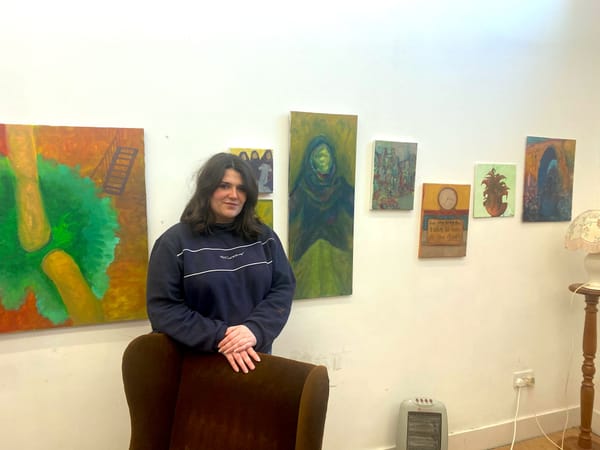
Scotland and the intersections of Scottishness ended up becoming a focal point in my art practice and the basis of my undergraduate dissertation.
In studying for my dissertation, I came across this phrase and I felt like so many conversations, sentiments, thoughts and feelings clicked into place: Caledonian Antisyzygy.
Coined by literary critic G. Gregory Smith just after the first world war, the phrase essentially refers to Scotland being made up of opposites all at the same time, although he was referring to literature and language; this exists everywhere in Scotland.
Highlands and lowlands; east coast and west coast; high road and low road; countryside and cityscape; islands and mainland; catholic and protestant; very friendly and infamously dangerous; always forgiving and absolutely merciless; brownies that clean your house for free and faeries that will steal your baby and not think twice about it.
In my second year at the ECA, my friend Freya Yeates lent me a book called The Glass Half Full: Moving Beyond Scottish Miserablism by Eleanor Yule and David Manderson.
The book detailed how this antisyzygy manifested, and how Scottish visual culture could be separated into the Kailyard (nostalgic aesthetics set in the countryside where Scottish people are portrayed as backwards, uber-traditional, sometimes even stupid or blissfully ignorant of the rest of the world, and often drunk).
Or Miserbalism (urban and gritty aesthetics set in cityscapes, where Scottish people are portrayed as unforgiving, often selfish or scathing, with a backdrop of drug use and violence, where the protagonist has to choose between leaving their home or die trying).
The authors went into depth about why Scotland was portrayed in this way and how it is a shame that Scotland and Scottish people aren't afforded more nuance culturally, especially on screen where Scotland is on show to the world.
It made me think about how people perceive Dumbarton and the Vale.
Geographically sat on the southernmost tip of the highland line, we’re too lowlandish to be Highlands but maybe too bumpkin to melt into any cityscape, still we sit sandwiched between Clydebank and Luss, not being more of one than the other.
Known for Loch Lomond, the song and the body of water, conjuring a picture of quaint picnics and welling up at the end of a wedding; the lived experience being one of drinking up the back woods of the park and young team culture.
People might have known about the textile heritage of the place, but not about the significant Communist history and heritage where workers banded together to create a Little Moscow.
Maybe they recognise the convent or have heard of the Carmelite nuns, do they know they’d let you go on Bebo in class though?
Dumbarton and the Vale are a patchwork of all these schisms, a delicate balance, precisely at the precipice of every cultural biting point, every thread of our knit is a schism and there is no greater schism than the doggy suicide bridge…
Overtoun House is locally known for bringing babies into the world, but is globally infamous for the bridge where many dogs meet their deaths; cherubs swim on the ceiling in the Angel Ward only feet above the accidental pet cemetery.
The merciless fatalism of nature meeting the woman made softness of a maternity unit; where some say their animals won’t even go near, and others say they’ve seen a white lady in the window, bricks laid by men make a bridge imbued in the supernatural, a bridge connecting us to Overtoun House and Overtoun House to somewhere else: nothing is straightforward but it all makes sense if you’re already part of the ecosystem.
Unbelievable facts, never discussed or considered fiction.
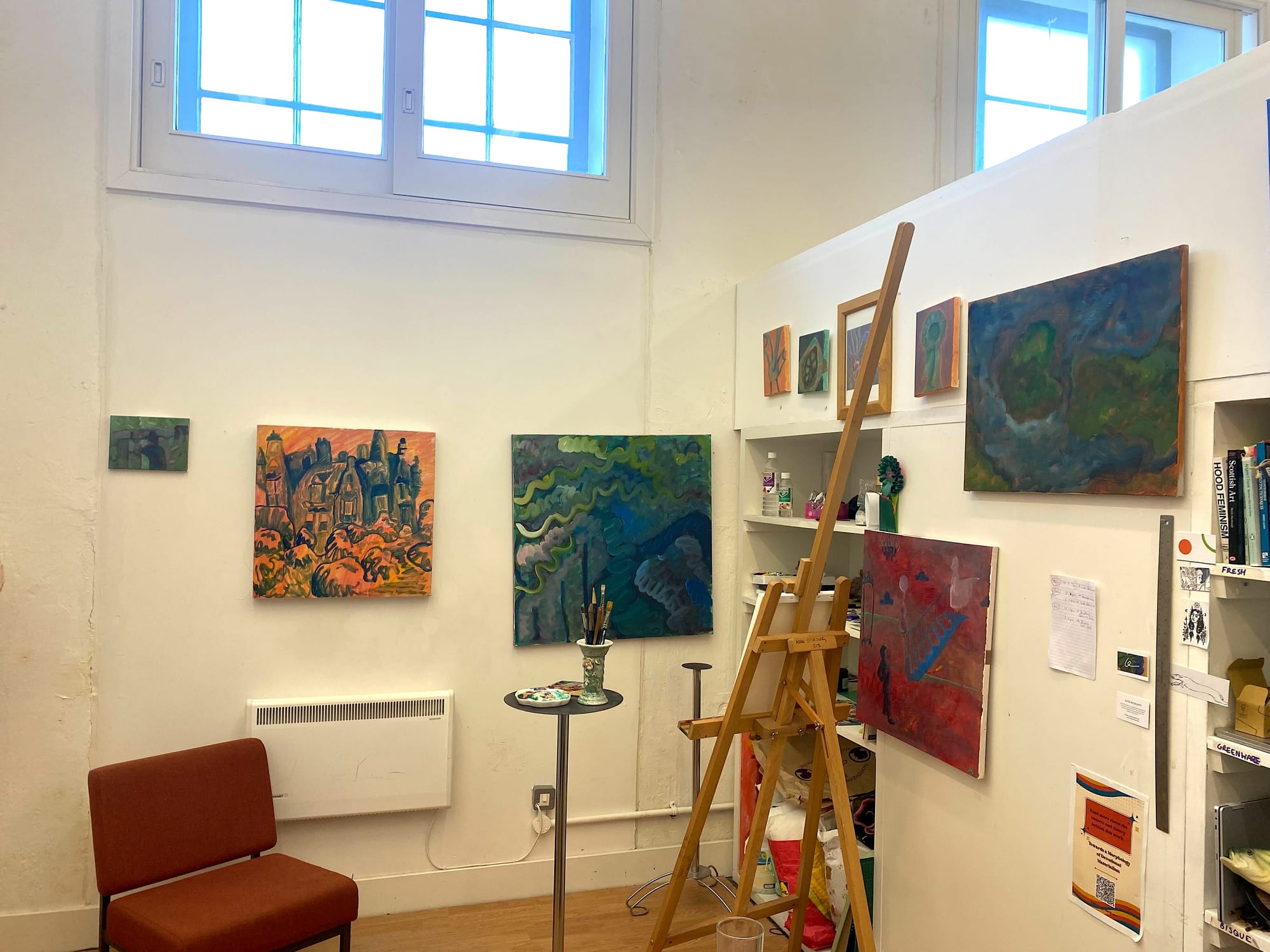
I’ve been thinking a lot about the schism Overtoun Bridge provides recently. I often listen to podcasts in the studio while I’m painting, one podcast was discussing fear and I tried to remember a time I was genuinely terrified.
I was reminded of a sleep paralysis nightmare I had years ago where a demon disguised as a nun (or a nun gone bad - we never spoke enough to clarify) was trying to drag me somewhere, clawing at my face, sitting on my chest and screaming.
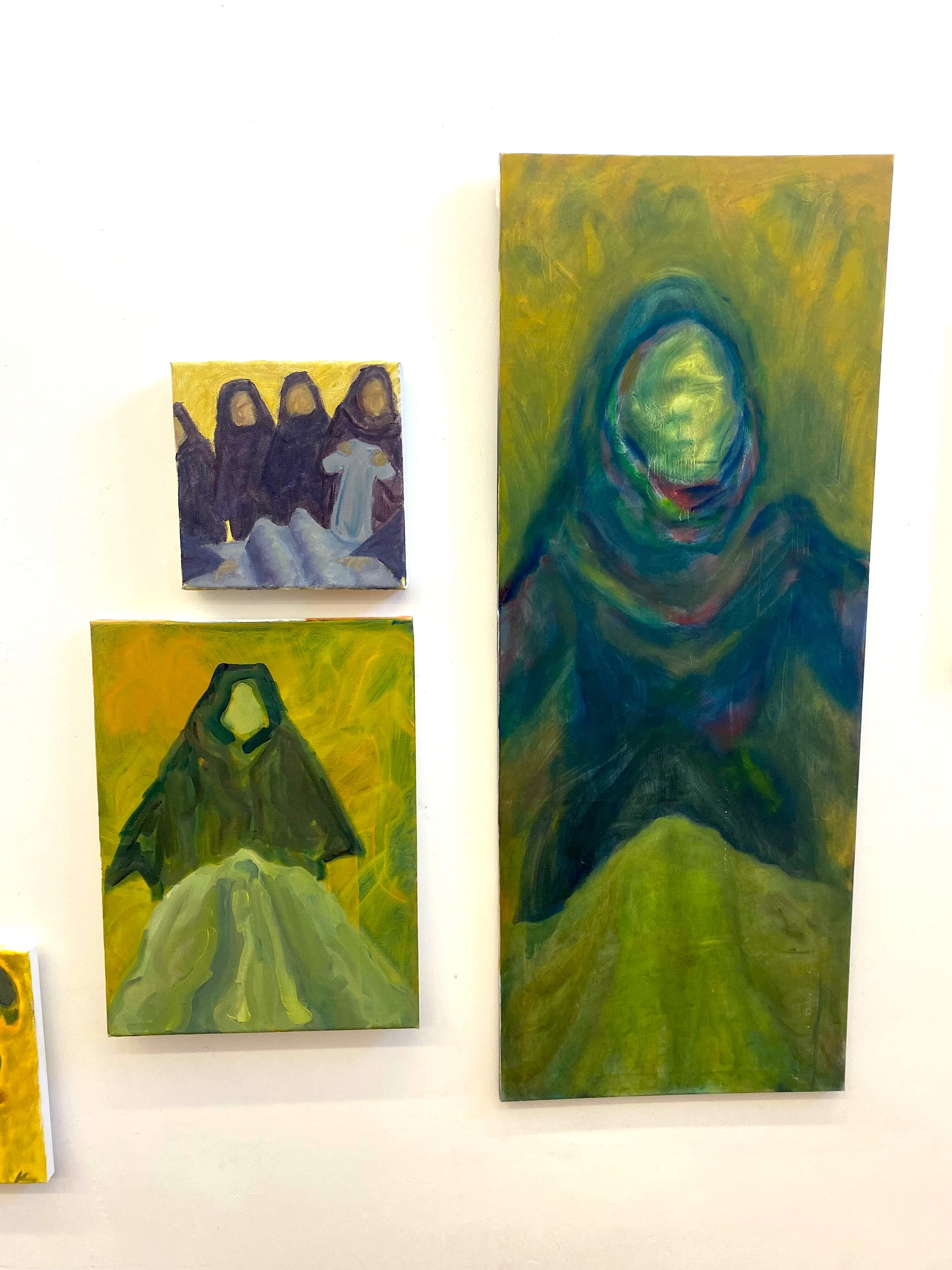
At the time, I think I’d been feeling bad for leaving Dumbarton and the Vale to go to uni, a very common feeling amongst especially working class people at universities, as for the first time in your life the world at home goes on without you; life at uni is fast paced and everything feels temporary, it leaves you questioning if this temporality is worth missing the permanence of home for.
The paralysis aspect was especially terrifying as any control I would typically have was gone; I wasn’t asleep enough to lucid dream as I usually would in a nightmare, nor was I awake enough to know it wasn’t real or do anything about it if it was.
Ironically, this schism in consciousness was the most West Dunbartonshire thing I could have done or been: not awake, not asleep; mind racing, pulse steady; my guilt manifesting in oxymoron, plaguing me for leaving an oxymoronic place, obviously having never left me. Maybe the nun was the Vale in me, coming to make me realise it could never leave me.
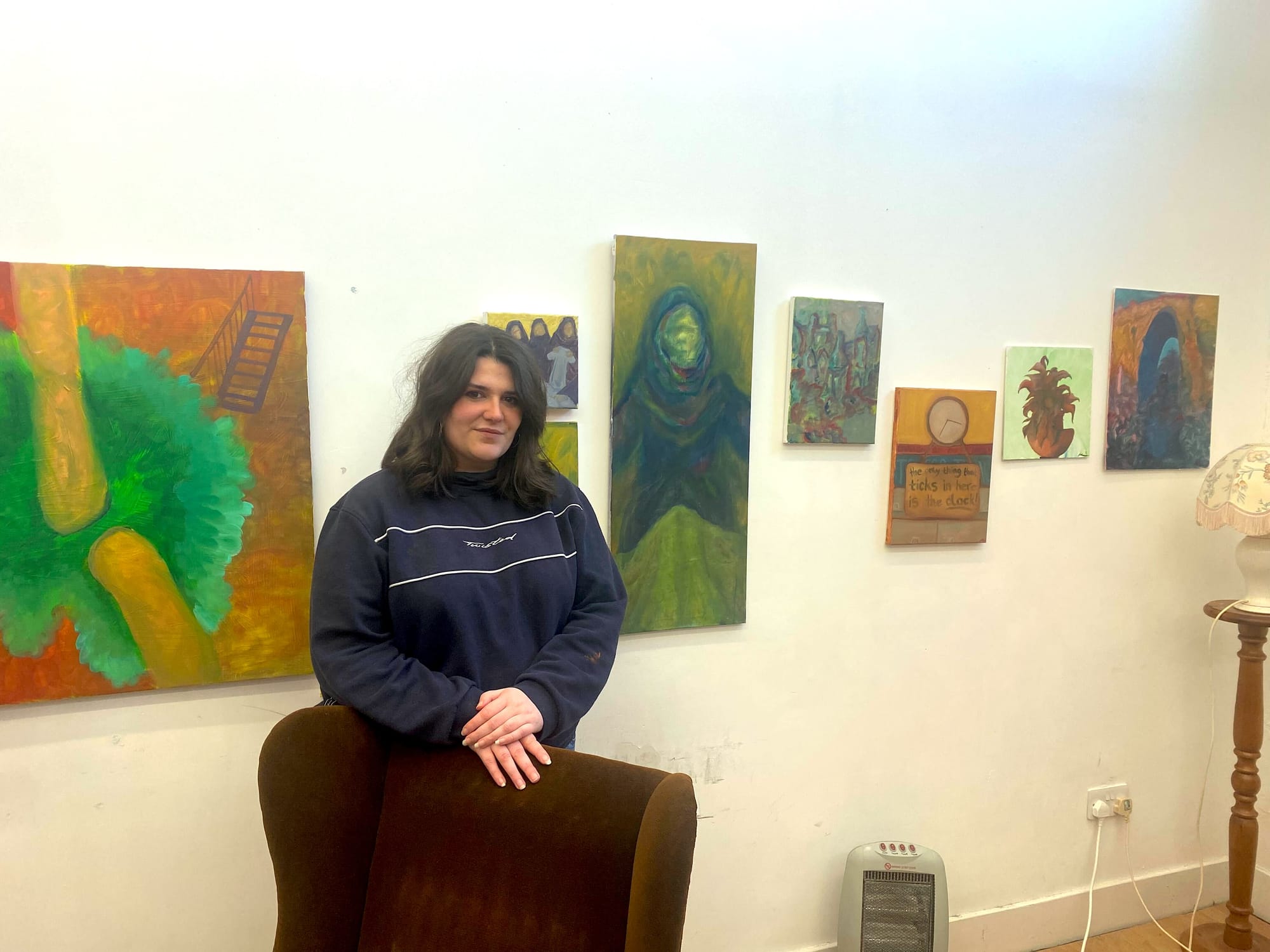
In 2021, I went to Dundee to complete my postgraduate degree, where I’m currently sat in my studio.
As I write this now, my mum has sent me a picture of a newspaper clipping where my Grampa was featured in the paper talking about driving buses full of the injured during the war, whizzing around West Dunbartonshire while bombs were dropping.
The place names and the stories are all familiar.
I heard them from him and then made memories in these places with my friends during the summers or after school as I grew in and with the place.
Every day, in little ways like newspaper clippings, or bigger ways like demonic visitations, I am reminded that I am, and cannot help but be, painfully obviously devoutly Dumbarton wherever I go.