
For the Sake of Wee Peter
Words by Rob Willliams & Photos by Harvey Smart

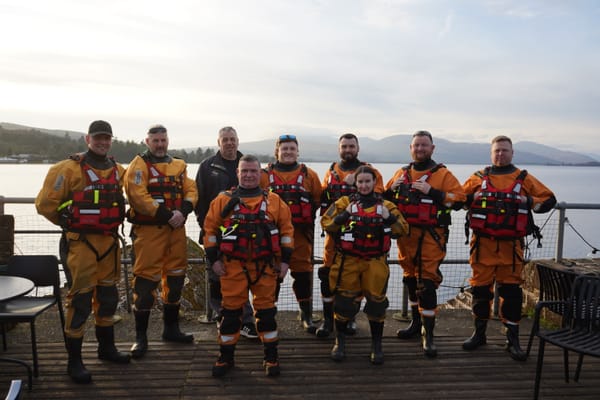
Take the Old Military Road to Luss.
A few metres offshore in Bandry Bay, Aldochlay stands a statue of a small boy, erected by a stonemason in celebration of a happy childhood spent in the area in 19th century.
A common myth surrounding the statue is that it commemorates a drowned child and locals have christened him ʻWee Peterʼ.
If the statue draws attention to the dangers inherent in water-based activities in and on the Loch then it does the community a service.
However, when things do go wrong, there is the Loch Lomond Rescue Boat.
Voluntary Rescue Service
The award-winning independent lifeboat charity, organises and runs a rescue service catering for people who use the Loch and its surrounds for recreation.
Established in 1977 with a generous gift from an anonymous benefactor, it is funded entirely by donations and is manned by local volunteers.
The 22 feet RIB powered by twin 150 HP engines can be at an incident within 20 minutes.
However, as current coxʼn Andrew Biddulph, explained:
“It is fast but when you are going somewhere and you know someone is in trouble it can feel very slow; the longest boat ride.”
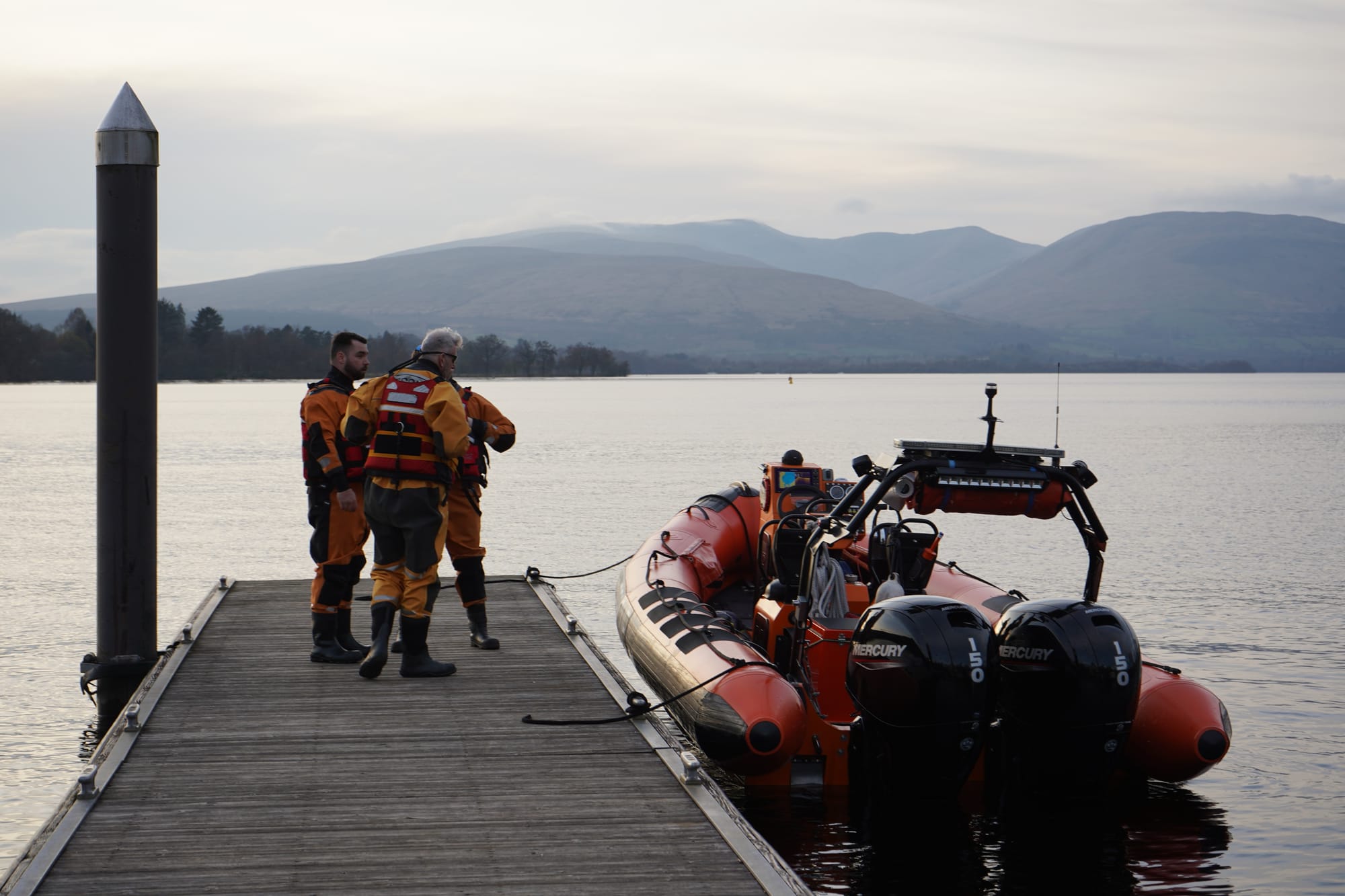
This was my first assignment for Clydesider magazine, and we were treated to a ʻtrip around the bayʼ- not what I had expected!
As we sped northwards towards Luss, I was amazed at how stable a platform the boat is even turning at high speed and how professional and confident the crew are in their handling of such power.
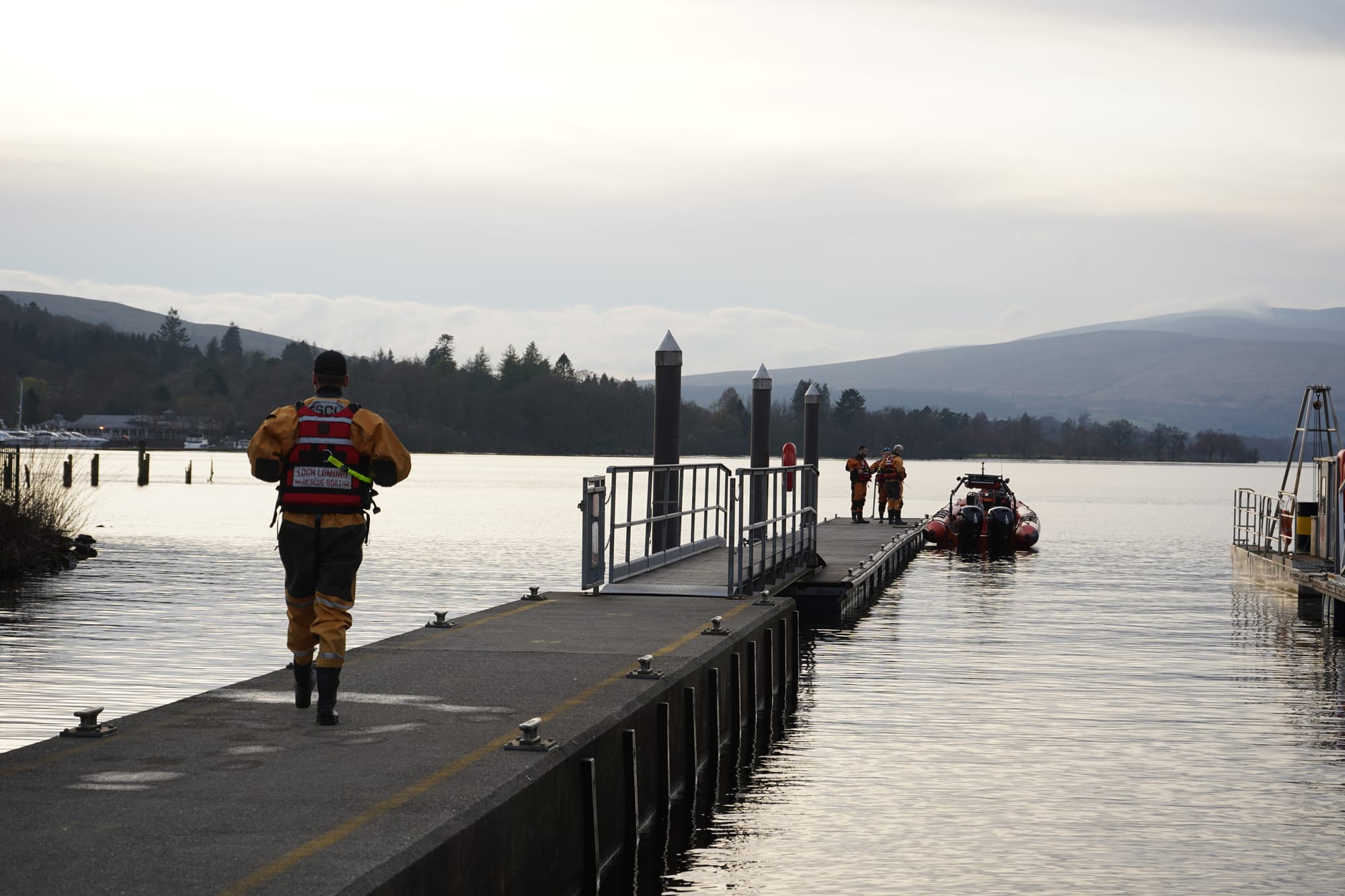
Until recently the charity was based at Luss but the pressure of traffic on the A82, meant that a move was essential and currently it is moored in Balloch, a space on the jetty provided by the National Park Authority.
Andrew pointed out: “This will drastically reduce call-out times and make a big difference. We are in the process of building a new boatshed locally.”
With a team of about 25 volunteers, local folk, who give their time to train every Wednesday evening and Sunday morning, they attend call outs to people who find themselves in difficulty on the water or, indeed, on the more inaccessible areas of land surrounding the loch.
Their volunteers are well qualified.
All are powerboat drivers or instructors, certified VHF radio users and first aid trained.
Some have more advanced medical training in pre-hospital care as the charity acts as first responders to incidents which depend on their presence.
The boat is crewed by two or three members, depending on the nature of the call-out.
More than Water Rescues
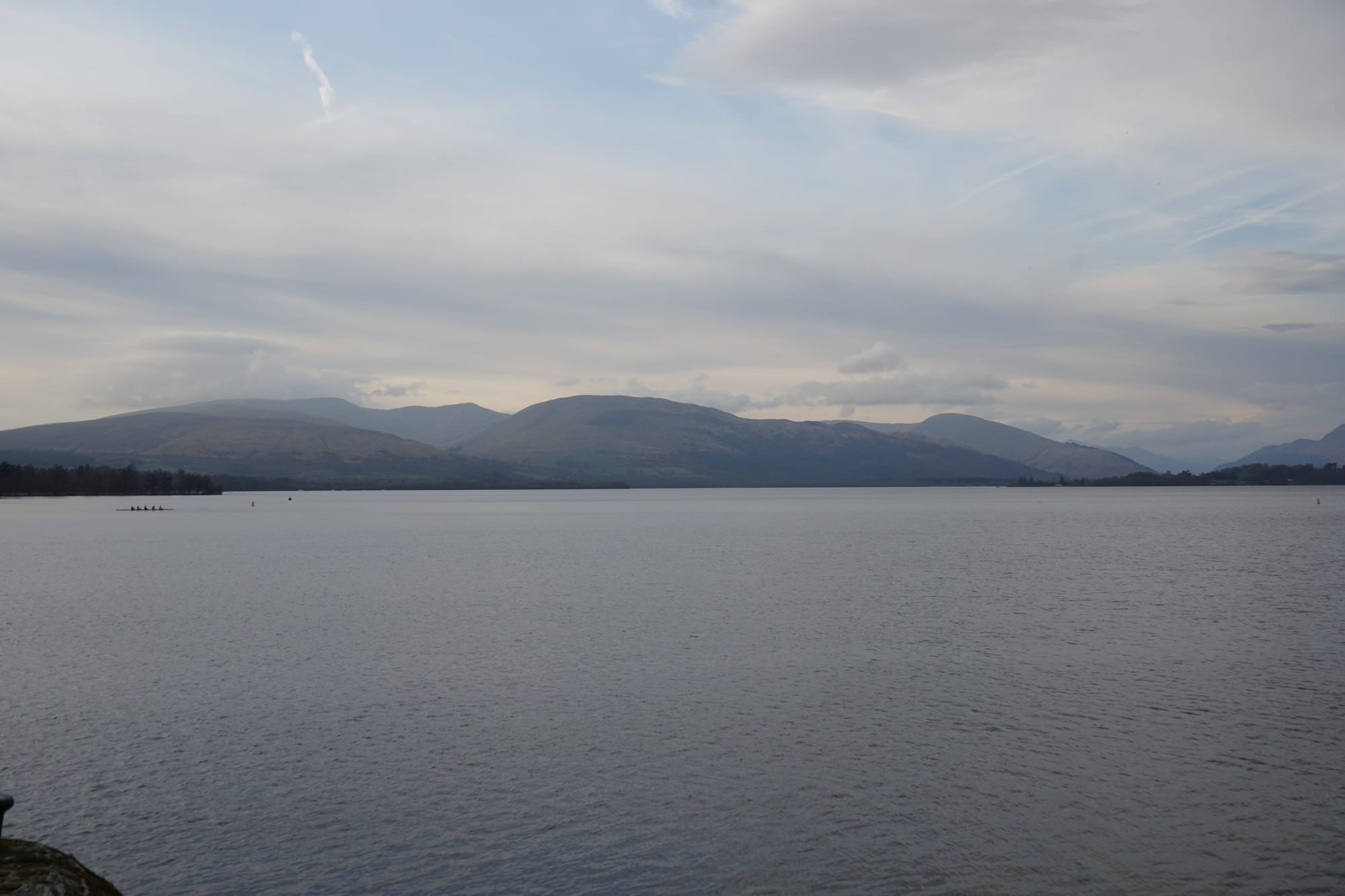
Most incidents in the south of the Loch are water-based.
“If we get a cracking weekend we can get as many as eight call-outs a day, sometimes being re-tasked whilst undergoing a rescue. Last year we assisted 213 people in trouble,” Andrew explained.
Incidents in the north of the Loch are mainly concerned with hill walkers.
Andrew added: “People get trapped or lost and in 2025 there were six cases of falls over 20 feet.
“Certain stretches of the West Highland Way can be treacherous; there are no roads around that way so ambulances canʼt get there so they ask us.”
And he was quick to point out:
“No blame is ever apportioned to anyone who find themselves in trouble. We stay completely neutral; you canʼt have folk scared to call you out.”
Each ʻshoutʼ is followed by a detailed de-brief and phone calls to individuals to re-assure and support.
The National Parks Authority helps with counselling for crew members affected by particularly distressing incidents.
Legacy
The personnel can become something of a family affair.
Indeed, Andrewʼs son and daughter are ʻon the boatʼ.
All volunteers are quickly made aware of the golden rule - one hand for self or preparation, the other for the boat.
If two hands are needed, then a fellow team member will give safety support.
There may be a misconception that the Loch Lomond Rescue Boat is part of the RNLI but it is an independent charity with no links to the institution.
It does work with other like minded emergency services - the police, mountain rescue, the fire and rescue service and is in contact with helicopter rescue and the Special Operations Rescue Team based in Linwood.
Andrew grinned as he remembered one training exercise: “Basically, they unloaded a fire engine on to the boat - pumps, ladders BA kit and a full fire crew to tackle a dummy fire on Inversnaid.”
Why Do It?
I asked Andrew why did he get involved? “Who knows,” he answered.
“It is time consuming and sometimes the family can get annoyed. Two oʼclock in the morning, torrential rain or snow, trudging out of bed to go to the boat and get freezing.
“But somebody needs help and there are some places we go to where we are the only people that are coming to help in a decent time.
“Over the years weʼve made a difference. Weʼve helped a good few people,” he added modestly.
We can be justifiably proud of the Loch Lomond Rescue Boat and its volunteers.
They are unsung heroes who live in our community and deserve our utmost support.
What then can we do?
If you do intend using the Loch for recreation, abide by the simple guidance surrounding water safety.
Be aware that the Loch is cold and there are many ledges where even simple paddling can be a hazardous activity.
The move to Balloch is to be made permanent which will need a new boathouse and slipway.
Planning permission has been granted and clearance work will soon get underway.
The new facility will include a boatshed, communications, medical, training and crew rooms.
Funds to build the structure are hard come by and there will soon be a big fundraising effort.
If you would like to become practically involved or help with fundraising, visit the website on lochlomondrescueboat.org or look them up on Facebook.