Pictures of Our Past
– 7 min read
They say a picture paints a thousand words, it can also tell you about the past.
I am a member of Stepping Stones, a mental health charity for West Dunbartonshire.
Earlier this year we were invited to take part in Picturing Our Past, a photography project run by Charlie Sherry from Inclusive Images social enterprise.
Although Charlie teaches a few photography techniques the course mainly focuses on telling stories through images and learning about and accessing local and Scottish heritage sites.
Charlie was inspired to create Picturing Our Past while delivering a course to a mental health peer support group in Drumchapel.
He explained: “We were talking about Drumchapel and its history.
"Most of the group had no idea of the history of the place or their own history.
“Then I suggested going to the Botanic Gardens in Glasgow but they felt it was not for the likes of them.”
This shocked Charlie as the Botanic Gardens are just two miles from Drumchapel.
He looked into why people from less affluent backgrounds, particularly those with disabilities, feel excluded from their heritage and successfully applied to the Heritage Lottery Fund for a three year project.
Picturing Our Past aims to introduce people to local heritage and encourage them to find out more.
Our course began in February and ran for eight weeks.
For our first task we were asked to bring in photographs of family members at work.
We talked about who was in the photos and where they worked.
Digital cameras were given to those who needed them, and our next task was to photograph monuments to local people.
I took photos of one of the blocks in Helensburgh’s Colquhoun Square.
It features a model of the ventriloquist’s dummy used by John Logie Baird, the Helensburgh-born inventor of television, to send an image from one room to another.
I also took photos of the war memorial bench in Christie Park, Alexandria and the statue of climber, author and broadcaster Tom Weir, in Balmaha.
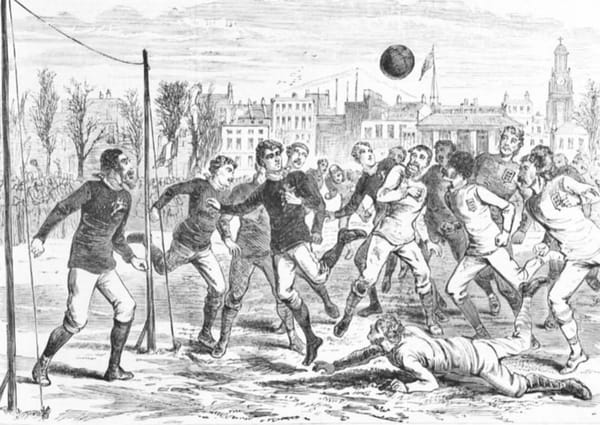
Other people photographed the plaque to remember Renton’s football team winning the World Cup in 1888 and a plaque on Glencairn House in Dumbarton to commemorate Robert Burns’
visit to the town in 1787.
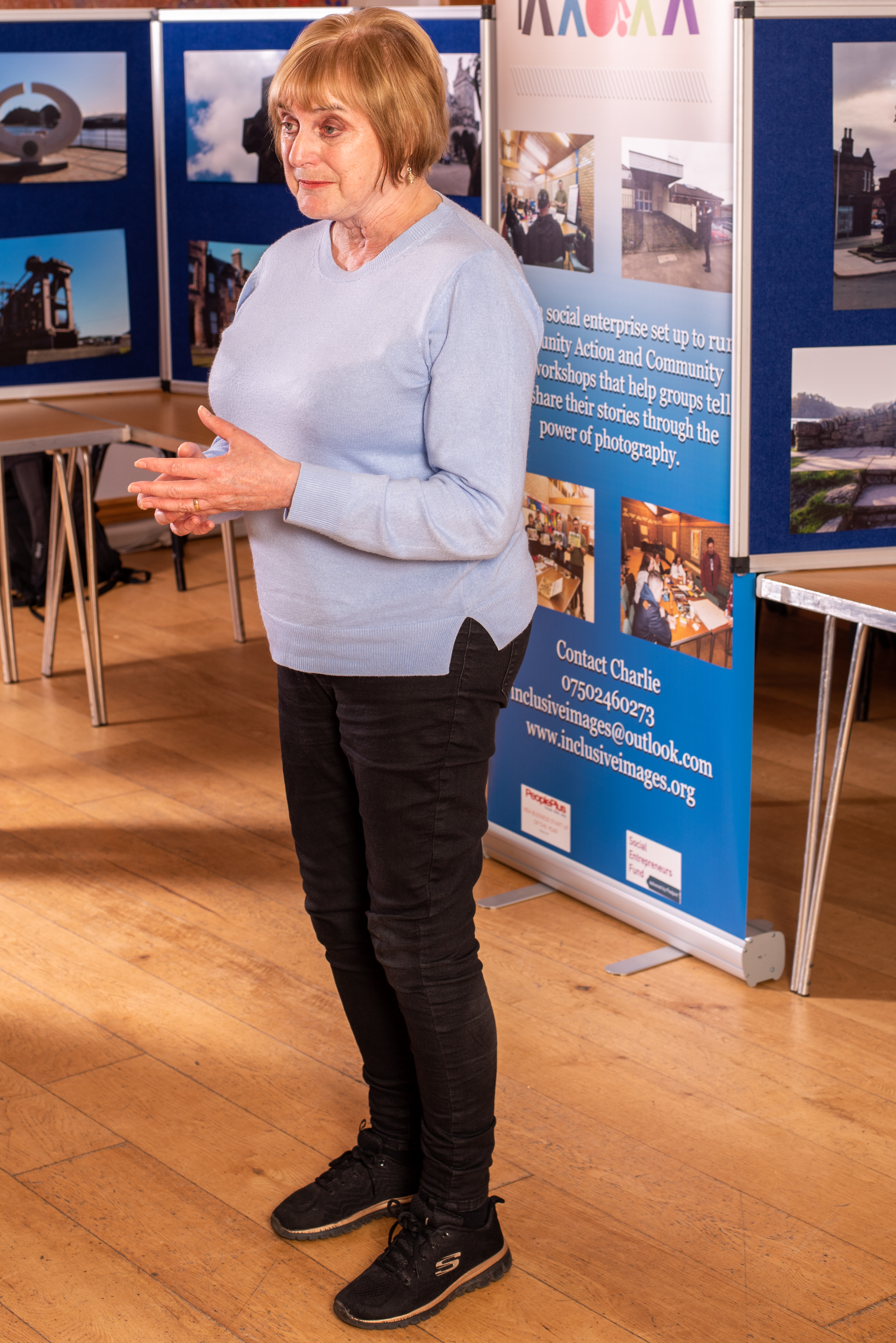
On the third week Elspeth Crocket, Dumbarton resident, retired teacher and volunteer guide at Dumbarton Castle, came to talk about the history and future of Dumbarton.
She told us about Robert the Bruce and how parts of him are buried in Levengrove Park.
Something which stood out for me as a wheelchair user, was that she would like a lift installed to the Castle’s French Jail so disabled visitors have some access to its history.
We also visited Kelvingrove Art Gallery to see an exhibition by amateur photographer Eric Watt.
The photos of Glasgow from the 1950s to 1990s were very good and ranged from children playing in the street to protests in the city.
One participant said: “It was great to remember good times from the past. Seeing the photographs transported me to the past.
"It also made me more questioning about Scottish history.”
Neil Fraser from Historic Environment Scotland visited us to talk about websites where you can view archive photos of places, people, and events all round Scotland.
Then we had a trip to Bannockburn and Stirling Castle.
Our first stop was Bannockburn Visitors Centre, run by the National Trust for Scotland.
When we arrived, we got the most important thing out of the way first - coffee and cake in the café!
Duncan Thomson from the Robert the Bruce Centre in Renton came along and gave a very interesting talk about Bruce and the Battle of Bannockburn.
We then went to Stirling Castle which is run by Historic Environment Scotland.
Here we met our guide for the day Kirsten Wood, the Learning Development Officer at Stirling Castle.
After a good lunch we headed for the exhibition in the tunnels which have great access for wheelchair users.
There are many things to look at including a model of the castle.
We then headed to other parts of the castle.
It was great seeing the architecture and the different rooms where the kings and queens slept and had parties.

They are trying to make Stirling Castle more accessible for wheelchair users.
In one room a small wooden cabinet on wheels has a mirror on it to help wheelchair users see the Stirling Heads on the ceiling.
This is such a simple and really good idea.
It was quite bumpy going over the cobbles in my powered wheelchair, but most of the castle was accessible.
We also saw a real life royal - well an actor playing one - the Duke of Lennox who gives his name to the Lennox area of Dumbarton.
We all took photos, some featured in our own exhibition at the end of the course.
One participant said: “The trip to Stirling Castle was a high spot for me, we could focus on producing images that reflected the historical context.”
There is a learning space where Kirsten showed the different weapons and clothes from the castle.
Unfortunately, I was unable to access this room as although they have a portable ramp it was too steep for me to use.
As there is a wall in front of the rooms, they can’t put in permanent ramps.
A committee is looking at accessibility in the castle.
They would like to have a platform for wheelchair users to enter the exhibition space and go through to other rooms, including the learning room.
There is a smooth path to this part of the castle which, Kirsten informed us, was for the horses to walk on.
It would be good if a similar path could be put in the middle of the cobbles throughout the castle grounds to help wheelchair users and people with mobility aids get around.
Historic Environment Scotland are partners in the Picturing Our Past project and, according to Charlie, have been brilliant.
He explained: “From the off they fully got it, as it ties in with what they’re trying to achieve, to reach out to communities who they’ve found quite hard to engage with in the past.
“They provided a lot, from free guided tours, to sending people to give talks, to putting up the lunches, which was really good of them.”
Stirling Castle will also host a grand exhibition in autumn 2024 to showcase the photographs from all 11 groups involved in the Picturing Our Past project.
A big part of the project is to give service providers first-hand feedback so real change can be made.
To help with this Charlie set up a project Steering Group which includes many organisations and local people.
The group is looking at why people from less affluent backgrounds, especially disabled people, feel excluded from Scotland’s heritage.
Charlie said: “We’ve met on a quarterly basis and it’s starting to gain some momentum.
“From that we will produce a report, which hopefully will influence policy, maybe within their organisations, but also, maybe nationally as well.”
The other groups Charlie has delivered the Picturing Our Past project with include, Neighbourhood Networks, Golden Friendships, Work Connect, Men Matter and Chance 2 Change.
One idea to come from the Steering Group is for some participants to become ambassadors for Historic Environment Scotland.
I’ve volunteered and hope to help by making them aware of changes to help wheelchair users access more of Stirling Castle.
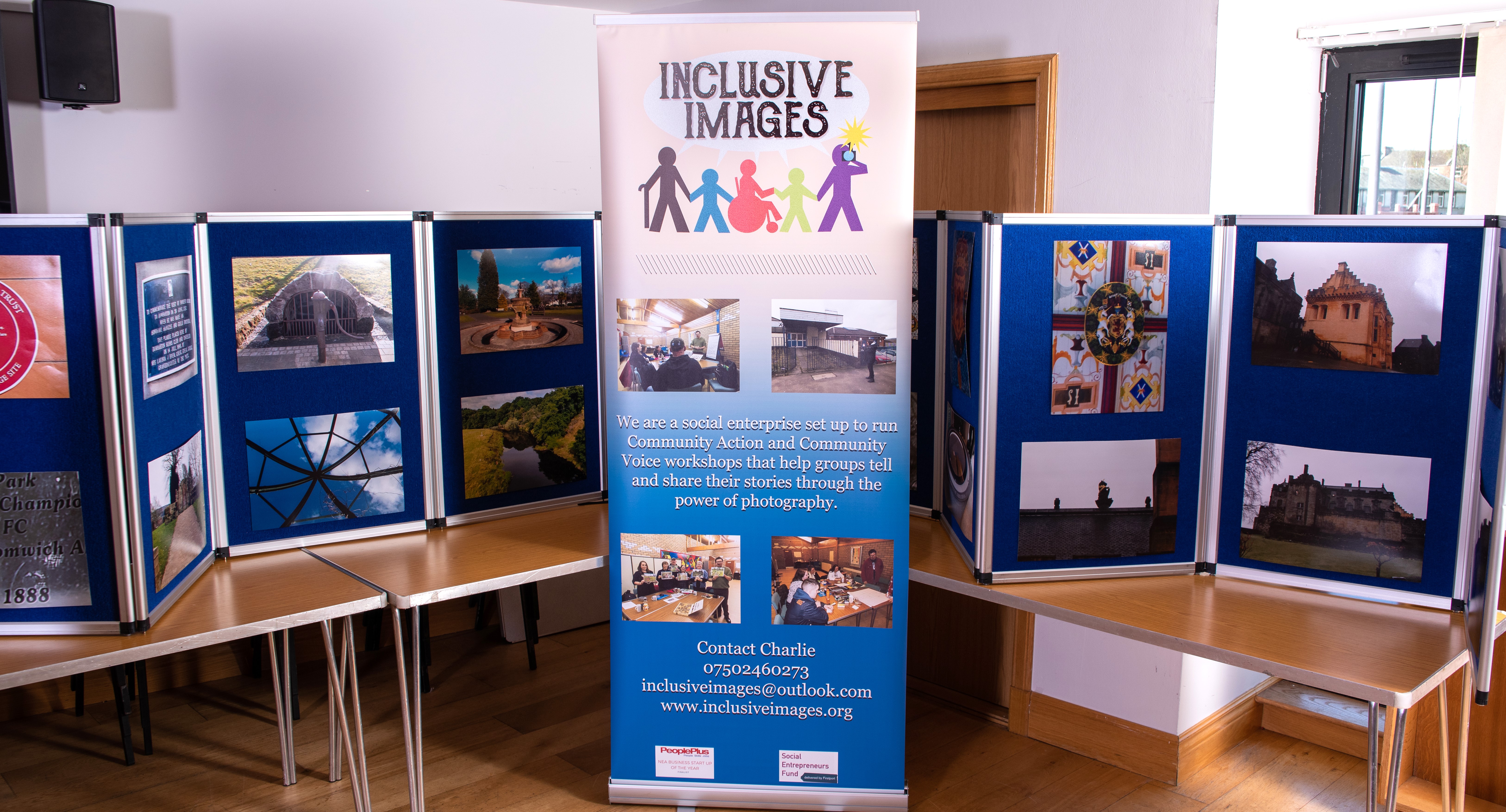
At the end of the eight-week project there was an exhibition of our work for friends and family, other members of Stepping Stones also attended.
Our photos were displayed on A3 prints and looked amazing and Elspeth presented us all with certificates.
Charlie has seen changes in all the groups he has worked with.
At the start some people say they’re not interested in photography or history and then become the most enthusiastic.
He said: “It’s great seeing people take an interest in historic buildings and things like that, but it’s taking an interest in themselves, that’s the main thing and building confidence, that’s what it’s all about.
“I’m not going to change your life, but I can plant a wee seed hopefully it helps grow confidence and you see things differently.”
And for several participants in the sessions with me, this is exactly what happened.
One said: “I liked the history of the castle and Bannockburn and taking photos and Glasgow Museum. I didn’t know much about Stirling Castle, now I know.”
Another said: “I couldn’t recommend this course more highly, I learned a lot and now possible future endeavours in photography and local history exist for me.”
And another commented: “Charlie was charming, enthusiastic, and inclusive.
“He shared his extensive knowledge of Scottish history and many beautiful examples of his photography skills.
“We were instructed in the basics of taking photos. I found by referring to these I could take a pic I was quite pleased with, and proud of.”
Hopefully this project helps people think about Scottish and local history as it was informative and lots of fun.
And I hope it helps give people better access to the world around them whether going to places they thought weren’t for them or creating better access in historic buildings and places of interest.
Thank you to Charlie and all involved with Picturing Our Past.
If you enjoy reading stories like this and want to help keep our positive community news free for all to enjoy you can become a Clydesider member here: Clydesider Community Magazine's Ko-fi Membership