Witches of Dumbarton
By Laura Giannini Photos courtesy of RAWS

– 5 min read
By Laura Giannini Photos courtesy of RAWS
It is mid-October. I am surrounded by orange pumpkins, angry black cats and old ladies with green faces, long noses and huge conical hats. It will soon be Hallowe'en.
How many people, I wonder, looking at those stylised farcical displays give even a passing thought to the many thousands of unfortunates actually accused of being witches?
I am pleased to say that I met someone who does.
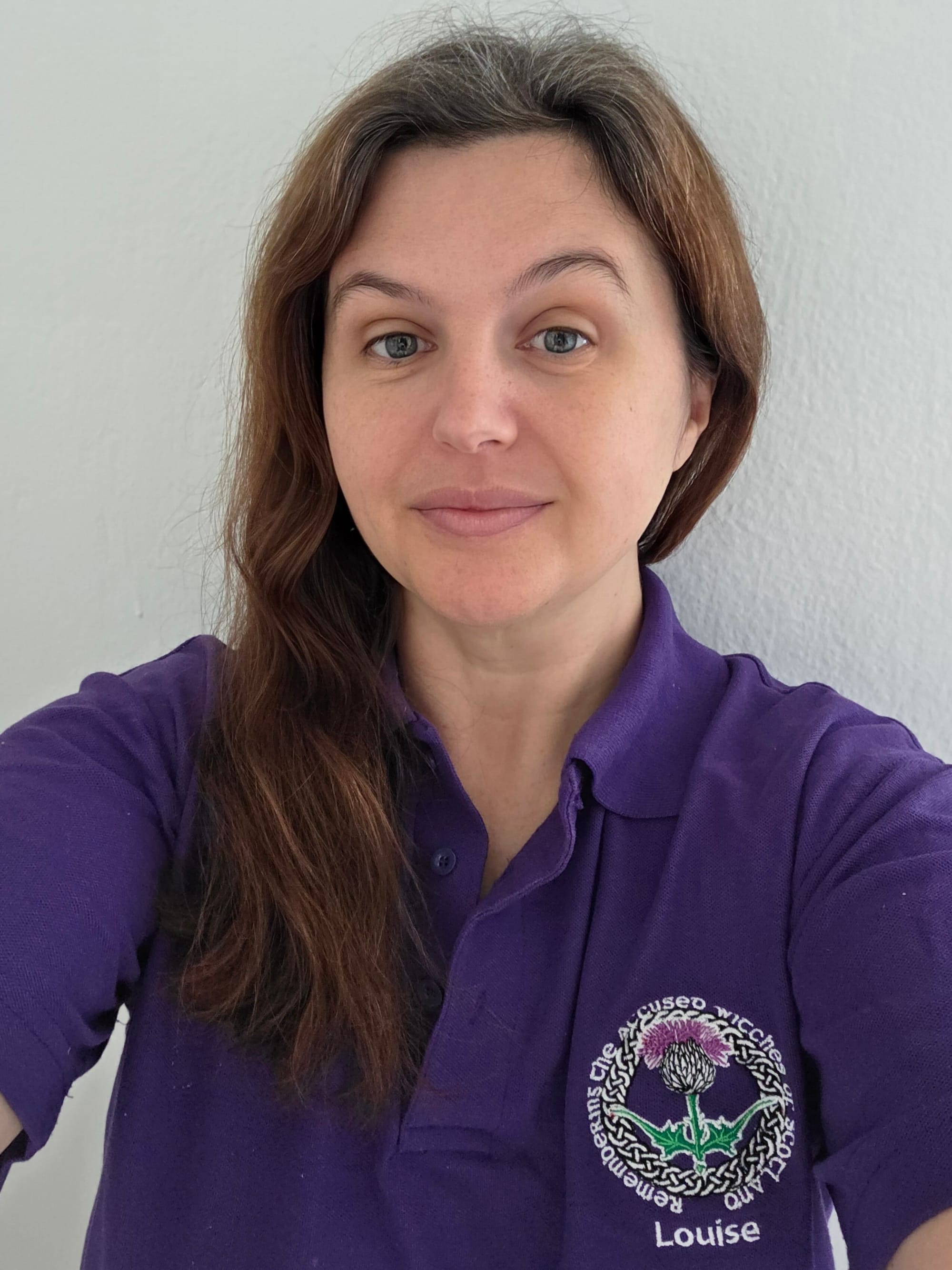
Louise Wilson, is Secretary of the Remembering the Accused Witches of Scotland (RAWS) charity.
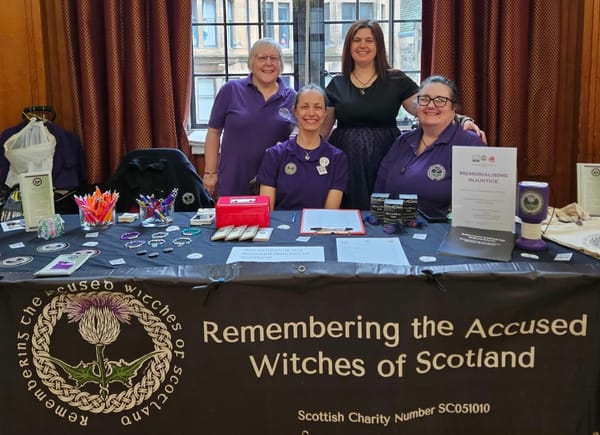
This group of historians and social activists are documenting the 4000 people known to have been accused, tortured and killed as witches in Scotland alone.
Of these, there is a huge disparity with +80% women; one more example of the discrimination against women in our male dominated society.
The RAWS charity has already managed to obtain a formal State apology for the 'witches' from then First Minister of Scotland, Nicola Sturgeon.
Louise, why is it important to honour a few women who lived centuries ago?
“Remembering those poor people, and particularly the women, accused of witchcraft is important because it is an example of the way one group with an agenda will manipulate another, coalescing them into a force, uniting them by the easiest, quickest way known to man – hate and fear of another.
“And it is important to realise it is still happening.
“Today with social media, it involves bigger groups, is more widespread, has quicker diffusion, but it still uses hate and fear.
“It really doesn't matter if it is one nation against another, one religion against another, blue against green ...”
And, of course, the repression of women.
Even now, this year, the rights of women have been eroded, history moving backwards.
Despite supposed equality, women are abused and those who should protect them, don't, because the abusers are more important, powerful, respected or feared.
Louise continues: “Whichever way we look at it, women were and still are less powerful in society than men. That is their downfall. It was then and it is now.
“That is why it is important that we remember and acknowledge those women who were tortured, killed then literally swept away, out of life, out of the roles, out of history.”
I have to agree that women are very second, third or fourth rated citizens. I have written about this in this very magazine, but witches in Dumbarton? Surely not.
“Oh yes. No place was exempt. Imagine this, because this story is real, it's well documented in the account records I've searched.
“So, as an example, one woman, Jonet Boyd, was accused of witchery by a man, a notary, who states she pulled away, pulled him around and threw a stone at him – note that he does not say what he did to her to have her react that way.
“It could have been she repulsed his advances, or perhaps the milk she brought was soured, or a cow died, a sheep lost its lamb … any mishap could be an excuse/ reason.”
Louise explains what happens next. “So, first there is 'the examination' of the accused.
“Such examinations included being fitted with iron boots and stakes inserted into legs and feet, thumb or finger screws that would twist the fingers around, they would be made to walk and stay awake for three days and nights, during which time she would be asked repeatedly to confess to her misdeeds.
“Note, this was not seen as torture!
“If she survived the exams, she would then be stripped naked, shaved all over and brought before the judiciary.
“These 'worthy' men would have her examined again, perhaps by pricking her with pins.
“It was considered proof of protection by the devil if any part of her skin was not sensitive to pain – always assuming she was conscious enough to still feel what would be relatively minor pain compared to the torture of the examinations she had already endured.
“Can you imagine her screaming, 'stop, please stop. Yes, yes, just stop?ʼ”
Her confession obtained, she was brought to trial at which witnesses would testify they had seen her cavorting naked, holding discourse with animals, dancing with the devil, and, yes, even flying on her broom.
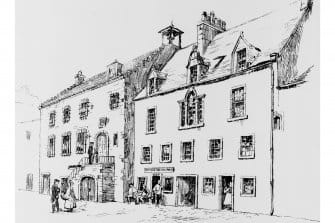
Poor Jonet was then dragged from the tollbooth, which would be where Poundland is now down the High Street, to the corner of Church Street to be executed.
In a 'merciful' execution the witch would be tied to the stake and the executioner would apply a garrotte which he would twist, hopefully she was dead before the fire started.
“In Dumbarton she was strangled then burnt at the stake,” Louise tells me.
“And imagine this, the way I was able to document 32 by name, is more from the records of payments.
“You see their goods, everything they had, would be sold and could be used to pay the 'executioner for his pains'.
“And in Jonet's case, the records indicate payment to a landlady of a tavern for food, drink and cigars for the judiciary panel to 'refresh them after their labours'.”
The charity that is sponsoring a memorial for these women, is called Remembering the Accused Witches of Scotland, the emphasis is on Remembering, why is that?
“The 'witches' were literally swept out of history. Even their ashes would be swept up, washed away. The only way to link women past and present is to remember them, a memorial would do that.”
The RAWS charity wants to raise money for a memorial plaque, do you see this as a good use of funds in these cash-strapped days?
“Yes, anything that makes people stop and think about hate and the manipulation of one group against another has to be a good thing.
“It will be heritage grants and this is part of the history of the people of Dumbarton.
Local art students will be invited to design the memorial and our panel – which has members from all over Scotland – will select the one they feel most appropriate.”
A colleague, Caitlyn, proof- reading this showed me a tattoo 'they didn't burn witches, they burnt women'; that is worth remembering.
For more information visit: www.RAWS.scot