Women Against State Pension (And Other) Injustice
– 5 min read

When the Clydesider asked if I'd be interested in writing an article about the WASPI women, the first thing I said was, “it won't be positive.” They said, “write what you know and how you feel.”
What I and most WASPIs (Women Against State Pension Injustice) feel, is furious, frustrated and worthless.
Why? Because in 2010 one group of women, who did not have a chance to properly prepare, were made to bear the brunt of all the changes to the pension system, instead of, as originally proposed in 1995, the changes being spread across a longer period.
Unjust, said WASPIs. They asked for compensation.
Here I want to bring in MSP Jackie Baillie, as she has been a strong supporter of the women who lost years from their pensions.
She said: “When I became fully aware of the predicament of these women, I wanted to find out how many locals were involved. What was the reality of the situation?”
Mrs Baillie and her staff organised an open meeting in the Concord Centre in Dumbarton.
The MSP said: “I was stunned by how many women turned up. The place just wasn’t big enough, women were standing in the aisles, out in the foyer…
“I began to perceive that full re-instatement would never be agreed. The sums were just too large.
“At the same time, it was more than obvious that these women had been unjustly treated. Some compensation had to be due.”
Governments dragged their feet.
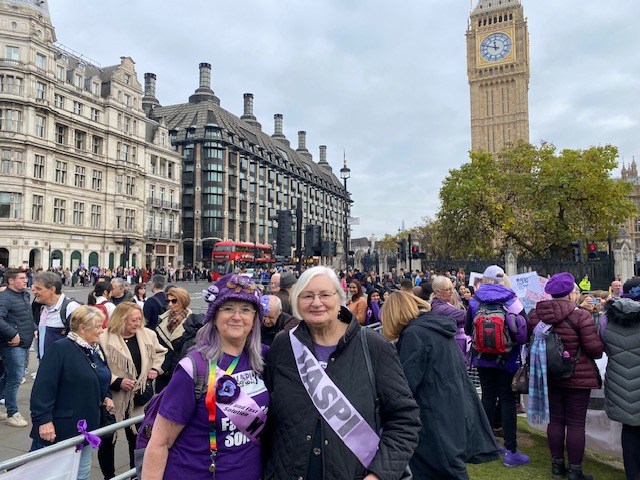
Keir Starmer, in opposition, told the Conservatives to get on with paying compensation. But in government told Parliament that 90% of people knew of the pension age change.
Mark, he said people, not women born in the 1950s; nor did he say when, how many and what demographic were polled.
Statistical vagueness can be so very useful. There is such a difference between asking a whole range of ages about their awareness of potential pension reforms in 2020, say, or asking 50-year-old women in 2010, “are you aware you can't retire till you are 66?”
December 2024, the new government, with the first ever female Chancellor of the Exchequer — how's that for irony — dealt the women born in the 1950s another heavy, if not wholly unexpected, blow.
Compensation for our claim of State Pension Inequality was found not to be “a fair or proportionate use of taxpayers' money.” Presumably none of those women were taxpayers!
Yet again, women are the easy target.
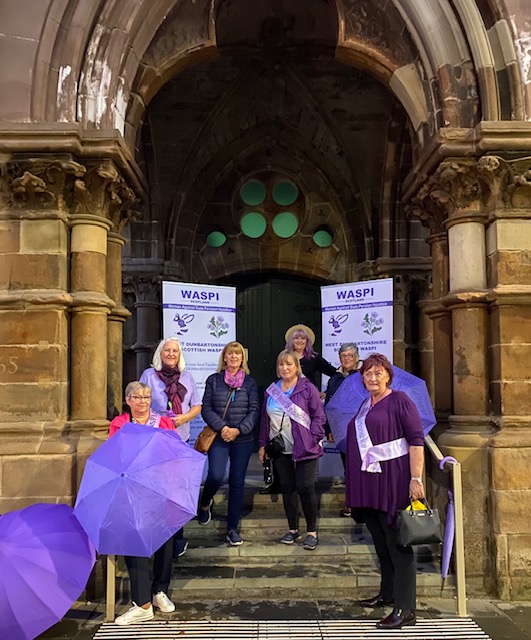
Liz Daly, West Dunbartonshire WASPI co-ordinator, like me, discovered she would have to wait six years, when she asked about pension arrangements.
She explained: “My husband was very ill, terminally as it turned out, so I decided I would retire as soon as I turned sixty.
“You cannot imagine the shock at being told I would have to wait six years. I was devastated. How would we manage?”
Sometime later, Liz, now a widow, went to a WASPI meeting and decided to get involved.
“The stories we heard... I can't tell you. It seemed impossible that these supposedly clever people didn't understand how devastating the changes were.”
Being less charitable, I say they knew — they just didn't care.
Mrs Daly was in court when the first WASPI case, on which millions of us 60-year-olds had pinned our hopes of a re-evaluation of the government's brutal blow to our life plans, was dismissed.
She told me: “The hurt was almost physical, all around, inside and out, women started sobbing and screaming.”
Perhaps the only comment worth repeating was Jeremy Corbyn's: “beyond disappointing.”
Still, there was a glimmer of fading hope — the Parliamentary and Health Service Ombudsman (PHSO).
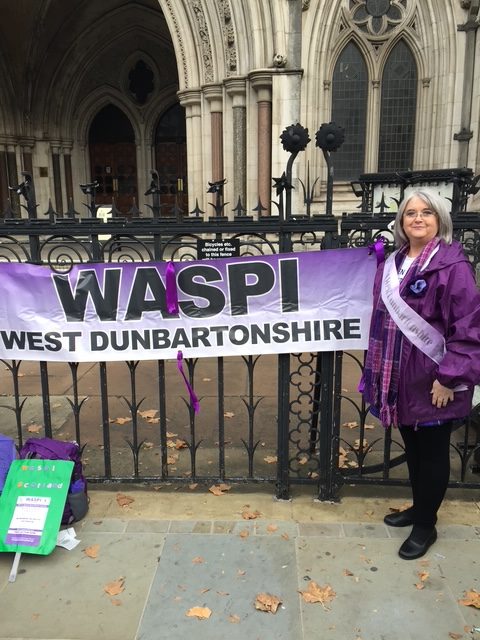
In March 2024, after much delay, the PHSO found the Department of Work and Pensions (DWP) had failed to provide accurate, adequate and timely information about the change to their pension arrangements for millions of women born in the 1950s.
The PHSO ruled this amounted to maladministration and recommended compensation of between £1,000 and £2,950 per woman.
A spit compared to the £40,000+ women had lost in the six years of withheld pension payments.
Yet, the same ministers who claim they must accept their pay rise to almost £94,000 per annum, because they “must accept the decision of the independent body,” had no hesitation in utterly dismissing the independent PHSO's view that women should receive a few crumbs for the injustice suffered.
Mrs Baillie said she would have liked to see the Scottish Government create a special welfare benefit, “at least for those most adversely affected.”
For my part, I say politicians — left, right and nationalist — and the feminist movement have utterly failed women.
A quarter of the way through the 21st century and women's rights and support are being reduced or removed.
There is little or no care about the increase in danger to women. The official gender pay gap is rising — in 2024 it was at 9%. This means for every £1 a man earns, a woman earns 91p.
It seems the only equality we can achieve is to lose the extra pension years meant to compensate for child-bearing, caring roles, a disproportion of unpaid home management work and, perhaps, for the lower pay women receive for the work they do.
Now, honesty compels me, reluctantly, to admit a pension reform was necessary.
Women in Europe are living, on average, five years longer than men, while the birth rate is falling. This, together with rising unemployment, means there are not — and will not be — enough people paying into pensions to cover the longer payout period that comes with longevity.
To conclude this article, with my inner child screaming “it’s not fair,” I’d like to suggest women allow themselves to be shafted, metaphorically spat upon, because they do not react en masse, they do not stand all together against the injustices done to them.
I put it to the reader that women are a slightly larger group than men (50.5% to 49.5%) and, in general, cover more than one job; so if they went on strike, refused paid and unpaid work, the country would soon feel the bite.
It is my belief if only women would stand together, back other women, we could make a better world for ourselves and those who will follow.
Yet, as we see with our female Chancellor, solidarity is a microscopically rare commodity amongst women.
Almost 100 years after we obtained the vote, after 120 years of campaigning for equal rights, our wages are lower than men's, job equality a myth, rapes are increasing.
Time to stand woman to woman for improvement for women.
Perhaps the WASPI women will continue the fight against the many injustices – after all, they've had enough practice.
Support Clydesider and get every issue posted direct to your door from just £3 per month: Join Clydesider Community Magazine's Membership